


Thrill Of The Fight is VR’s Most Intense Workout
That is a very bold statement, sure. Who’s to really say what is the best? There are a lot of VR games suitable for exercise out there. Some are crafted specifically for the purpose of exercise, those tend to be the more boring games. Others are entertainment that just so happen to make your sweat glands cry furiously and your muscles ache. Often without even realizing it. Those are the great VR workout games. They are the antithesis of Peloton instructors and follow-along Youtube workout videos. They are fitness that doesn’t feel like fitness. They are the future of exercise. Simply put, they are fun. Thrill Of The Fight is chief among them, if your goal is to get sweaty and sore.

For those that prefer an Audio/Visual experience. This article is also on Youtube.
That is a very bold statement, sure. There are a lot of VR games on the Oculus Quest 2 suitable for exercise out there. Some are crafted specifically for the purpose of exercise. Those tend to be the more boring games. Others are entertainment that just so happen to make your sweat glands cry furiously and your muscles ache. Often without even realizing it. Those are the great VR workout games.
They are the antithesis of Peloton instructors and follow-along Youtube workout videos. They are fitness that doesn’t feel like fitness. They are the future of exercise. Simply put, they are fun and don’t feel like a chore necessary for health and a long life. Thrill Of The Fight is chief among these games, if your goal is to get sweaty and sore.
Build your Body and a Skill
As Kenny Powers of Eastbound and Down once said “I’m not trying to be the best at exercising.” While the wisdom of anything Kenny says in that show is dubious at best, there is some truth to this statement. Sure feats of endurance and strength are fantastic. If a great cyclist can go 10 kilometers without breaking a sweat and in record time, well that’s both impressive and an accomplishment. If they do that purely for the sake of being able to do it better the next time, then at the end of the day there is little point to it.
Well, it’s good for your health and maybe will grant better quality and length of life. That is the implicit tagline that is filling gyms across the country. Muscles are impressive and make you feel good. Exercise causes the brain to make, and this is a point everyone should know, free drugs that make you feel good. You don’t even need to smoke or inject them. Move a little, sweat a little, free drugs locally sourced from your grey matter. A pretty good deal.
Though as with so many things VR makes this arrangement even better. Thrill Of The Fight is fun on the Quest 2 and feels like an actual fight. You get better at it, as with a cyclist or a runner, but here you also build a skill. Those skills are fighting skills. Never boxed before? Well enough Thrill of the Fight will upgrade you from being a complete amateur. You can see your progression as a fighter in every dodged punch and well placed hook. It’s easy to get into because it’s interesting, and the better you get the more you win. Just like any game that doesn’t involve exercise.
The excitement of combat is reflected here as it is in many VR titles like Battle Talent, Gladius, Gorn, and so many more. Close Quarters fighting is done better in Virtual Reality than in any other medium. It may be obvious, but this is because Virtual Reality is the closest quarters simulated reality that humans have invented. Translating a mouse click to swinging virtual hands requires some cognitive dissonance to take satisfaction out of. Swinging a real arm to cause a virtual arm to swing into an opponent’s jaw removes several levels of abstraction from the equation.

Then there is the fact that you are actually accomplishing a task. Other titles like Beat Saber and OhShape come close to this, but their goals are abstracted. Follow the rhythm, move your arms in order to chop blocks or fit yourself into a hole. These are not tasks related to anything found in real life. They are abstract and gamified in the utmost sense. In Thrill Of The Fight the goal is to win a boxing match. That’s it. Beat up your virtual opponent with your fists before he beats you up. Full Stop.
There’s technique to it as well as skill, and physical fitness plays a primary role in players’ ability to win, but the goal itself is simple and human and relatable. It is real, and everybody on Earth has at least imagined themselves in a fight if they haven’t been in one. Thrill Of The Fight does not advertise itself as a boxing trainer, but the developers do state that existing boxing skills do help achieve success in the game, and that is an extremely true statement. While the developers may not be willing to say it, here at Reality Remake we definitely are.
If you’ve never boxed a match in your life, continual playing of Thrill Of The Fight will make you a better boxer. Footwork, agility, proper form, all the things that make a good boxer will reflect in success at this game. Constant practice leads to refinement. At the very least Thrill Of The Fight will teach how to throw a stronger punch, because stronger punches are required for victory. So is strategy, thinking about how to hit and when. So is speed, and the ability to quickly dodge a punch.
These qualities are why The Thrill Of The Fight is the most intense VR workout. That is the power of an entertaining, goal oriented Virtual Reality game that requires so much physical movement. As with any other game the want to get better and to defeat challenges encourages more investment of energy and time.
Getting better at a game is satisfying, and so is winning. The Thrill Of The Fight combines this with an intense boxing match. A physical skill will show improvement, and if you’re lucky you’ll never need to dodge a punch, but enough Thrill Of The Fight will definitely help with that. Whether you intend to or not, you will end up sweating and your arms will end up sore, and you’ll love it. The desire to win, to beat the next fighter, or to climb through them to the next highest difficulty, is so strong that it pushes the player physically in ways they may never push themselves when running a treadmill or lifting a dumbbell.
Even when panting, drenched in sweat, and praying that it will be over soon, it is very hard to not go that last round and finally prove that you can knock out The Duke three times in a row and cross the hurdle to the next fighter. That power has pushed players through games since games were invented. Challenges invite creativity and a drive to win, and in Thrill Of The Fight that challenge involves moving powerfully and quickly in a way that will burn fat and calories much faster than any other Virtual Reality experience.

Science Agrees
That is an easy thing to just state and then skip over as though that proves the point of this article. Simply saying that Thrill Of The Fight is the most intense VR workout does not mean that it is, especially to anyone that has not tried it as well as all of the other intense VR games out there. There are many other Virtual Reality experiences that will give a great workout. Pistol Whip, Supernatural, and FitXR.
The aforementioned Beat Saber and OhShape. Objectively it can be said that those games generally rely on waiting for something to happen before the player responds with physical action, and so do not encourage physicality as much, but that is leaning into abstract and conceptual territory. With the proper settings Pistol Whip can be extremely intense, or a few simple arm movements and a couple of squats.
Luckily the folks over at the VR Health Institute have already asked these questions, and compiled a list of Virtual Reality games and their workout equivalents here. Thrill Of The Fight’s rating comes in at 8 to 10 calories per minute, the equivalent of rowing. It has an MET (or Metabolic Equivalent) of 9.28. Basically, the game gets you breathing really hard. While not measured by the VR Health Institute, it also gets your arms sore.
The only game to come in higher is Audioshield Modded. Unfortunately modding Audioshield is not as easy as just installing Thrill Of The Fight. Even for those willing to do so, Audioshield falls into the same trap as Beat Saber and OhShape. Players will only push themselves as hard as the game tells them to.
Thrill Of the Fight’s mechanics promote physicality, unlike those games. To win a fight early, before the last round is up, you must knock your opponent down three times in a single round. Pushing yourself to achieve this, when you have knocked them down twice and the timer is at thirty seconds, comes naturally.
Compounding the physical exertion of boxing itself is the drive to win, the desire to move higher. No stamina bar tells you when you are unable to throw another punch. Only being physically unable to throw one would stop it. In fact it is important to be careful not to overcommit to a punch and throw out a muscle. It isn’t unheard of to pull a shoulder, but still try to win the fight only using a single arm.
That is the drive provided by being faced with an opponent and a challenge. A rowing machine is easy to walk away from when you’re tired. A match you have yet to win is not.
Even though this study does not take the psychology of the game into account, second best still isn’t bad, if mods count.
But What Do The People Think?
Of course, despite these benefits, Thrill Of The Fight has not reached the popularity of something like Beat Saber, though Beat Saber is often lauded for its fitness capabilities. It is practically a meme that hours long sessions with that game will leave a player’s arms feeling like noodles. Maybe it is because Beat Saber has existing popularity, and the hardcore VR fitness community is one that is still growing. Maybe it is because Beat Saber’s integration of music and visual style is simply so much more advanced than Thrill Of The Fight. So Reality Remake took to Reddit to see if players consider Thrill Of The Fight to the be the most intense VR workout.
One thread was in r/vrfit found here.
The other was in r/ThrillOfTheFight, found here.
Here are some of the best responses. Most inspirational of all was u/Urhoal_Mygole’s reply:

This is the power of making entertainment exercise. Sure people get into fitness all of the time and turn their lives around, but with games like Thrill Of The Fight it’s so much easier to get into it. Take this reply by u/EggMcFlurry:

This comment hits the nail on the head exactly. The power of competition is so great that this game inspires exercise without even meaning to.
u/tarsus1983 feels the same way.

The response, as in any public forum, was not uniform. Though in both threads it seems that agreement with Thrill Of The Fight being the most intense was higher than disagreement. Especially, of course, in r/ThrillOfTheFight. Though the thread in r/vrfit definitely had some good recommendations for other games with high energy expenditure. Chief among which was a recommendation for Pistol Whip. As a side note, as far as exercising the legs with a similar intensity to Thrill Of The Fight, Pistol Whip is great, and so is Blaston. Even A Township Tale can make you sweat.
Conclusion
The science says that of the available games, only a modded verison of AudioShield is more intense than Thrill Of The Fight. Though AudioShield’s gameplay does not encourage pushing yourself to the limit nearly as much. Average reddit users tend to agree. The evidence of people’s lives' being changed by this boxing experience is enough. Thrill Of The Fight is chief among fitness games for its intensity. Look deeply enough into the VR fitness community and many stories similar u/Urhoal_Mygoal’s can be found. Maybe another contender will come along and take the title of “Most intense” from this boxing bonanza. Maybe not. In the meantime there’s no better place to burn a few calories, knock down a few opponents, and most importantly have some fun.
The Thrill Of The Fight by Seaslost Interactive can be purchased on the Oculus Store for the Meta Quest 2 or PCVR for 9.99$, or on Steam for 9.99$. If you like punching and want a workout it’s more than worth the price.

Ascending - Dojo: Martial Arts Magic
The movement required to use bending in Ascending - Dojo is not simple, it is not rote, though it can be memorized and done better over time. It is complex and beautiful in execution, as any form done properly in an actual martial art. This is the refinement of a previously used mechanic, in line with the aesthetic of Ascending - Dojo. It is clear that Selfox did not invent the required movement randomly, or simply used whatever was convenient for gameplay purposes. To execute the magic feels like an art form. Do not do it too quickly, do not do it too slowly, complete it with precision or fail to get the desired result. The result is virtual Martial Arts.
Ascending - Dojo is in development and currently has a Kickstarter Campaign. We also have a video showing off the Ascending - Dojo tech demo here.

Ascending - Dojo is a game compared by its Creators at Selfox and others to a VR version of Avatar: The Last Airbender. After experiencing the tech demo, which is available on SideQuest, the comparison seems very apt. Here’s why.
Magic as a Martial Art
You may have heard of or remember VR games like The Wizards. There are a few out there, and their main mechanic is that the player moves their hands in a certain way, maybe pressing the grip and flipping their hand over, and then something happens. A fireball appears that you can throw, or you pull your hands in a bow motion, and bam, a bow appears and you can fire an arrow.
This is very cool the first time you do it, and hearkens back to similar mechanics used in flat games such as Arx Fatalis, where the player would draw runes on the screen in order to cast spells. The only problem with this is that it is repetitive, and after a while is rote. There is some tension to be had trying to draw a rune in a life or death situation, but even that fades in time.
Not so in Ascending - Dojo. This experience takes the same concept and refines it from a gimmick to a core mechanic that is not only functionally part of the game, but aesthetically too. As with Avatar: The Last Airbender, Ascending - Dojo has a Chinese theme to the environment, characters, and equipment. So too does the magic, or bending if you prefer.
The movements required to say, shoot a gust of air from your hands for ten seconds, are complex. Start with your hands apart, hold the triggers down to open your hands, then twist them in a circle and bring them to your left side before holding both forward, wrists parallel.
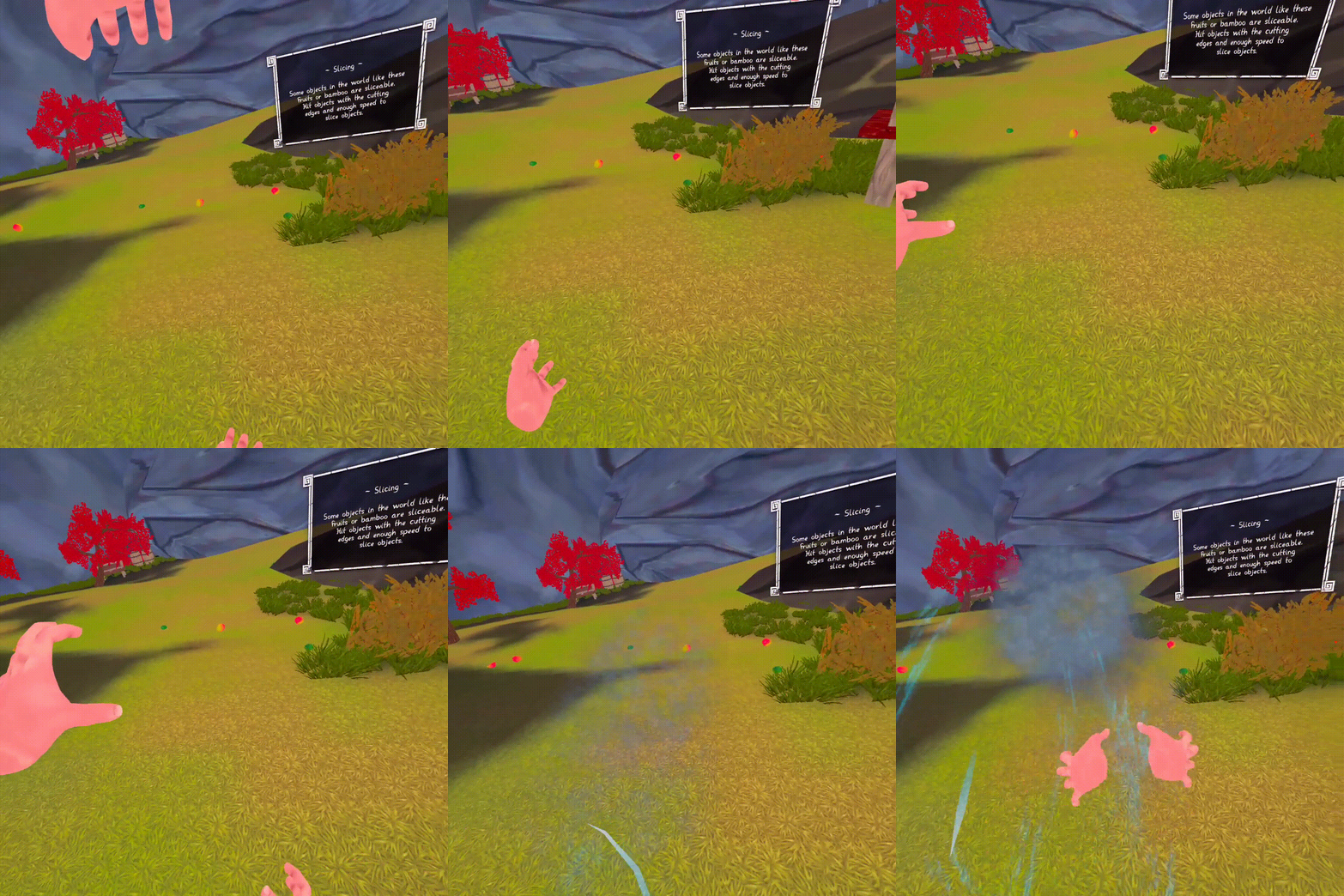
On the surface there is similarity here to older titles. Move your virtual hands correctly to get a magical, and impressive, result. The difference is in the implementation, and that is where Selfox’s ambition shines.
The movement required to use bending in Ascending - Dojo is not simple, it is not rote, though it can be memorized and done better over time. It is complex and beautiful in execution, as any form done properly in an actual martial art. This is the refinement of a previously used mechanic, in line with the aesthetic of Ascending - Dojo. It is clear that Selfox did not invent the required movement randomly, or simply used whatever was convenient for gameplay purposes. To execute the magic feels like an art form. Do not do it too quickly, do not do it too slowly, complete it with precision or fail to get the desired result. The result is virtual Martial Arts.
Each of the three types of bending available in the tech demo, Air, Fire, and Earth, have a distinct feeling to their movements. Just as in Avatar: The Last Airbender each clearly has a different martial art as inspiration for its movement. Air Bending flows like Tai Chi. Fire Bending is as quick and aggressive as Northern Shaolin style. Earth Bending is grounded and strong like Hung Gar. Each is different and each requires skill. Practicing using magic in Ascending - Dojo is like practicing an actual martial art or similar skill. Just like crafting in A Township Tale there are no skill points or trees to show improvement, just a better personal understanding of how to achieve your goal. Practice makes perfect. Do the same more more times and become more fluid at it, more adept. It’s satisfying, and it feels like mastering a Martial Art.
This is the immersive magic of VR in general. Ascending - Dojo is moving the bar forward in this regard, and seeing what they do next will be very interesting, and gratifying.
While the tech demo does not have too much to sink your teeth into, Ascending - Dojo is still in development. As of writing they have a Kickstarter campaign ongoing in order to fund the game.
If you would like to see these Virtual Reality Martial Arts in action check out our first look Youtube video here.

A Love Letter to A Township Tale’s Mines
It all started innocently enough, a little foray into the dark for some sandstone. I only needed a little more sandstone to finish building the bridge into the woods. So I grabbed my torch and the complementary pick near the entrance. Then I descended.
For those who prefer a Video/Audio experience. This article is also available on Youtube.
It all started innocently enough, a little foray into the dark for some sandstone. I only needed a little more to finish building the bridge to the woods. So I grabbed my torch and the complementary pick near the entrance. Then I descended for the first time.

Oh it was dark, scary, terrifying even. I heard the scraping of who knows what down in the tunnels. There I was, brand new to A Township Tale, expecting a light fantasy world of adventure and a fun crafting system. Instead I was cowering in a corner, glancing over my shoulder at the sound of every echoing scrape and hoping the wain light of my torch did not go out. I grabbed what I could and got the hell out of there. Off to greener pastures, but it wouldn’t be the forests that would hold my attention. It would be that dark, mean place.

As so often in RPGs, the reason was loot. The mines are full of loot, bursting with it. Crates, chests, all containing vital Blacksmithing molds and crafting recipes. The second time I went into the mines I only went down a single additional level, but I was hooked. The possibilities those recipes brought, the things I could make. I had to have more, MORE.

So I made a sword, hoisted my pick, readied my teleport potion, and so my addiction to delving in the dark began. Now I’m starting to understand dwarves a little better. Around every craggy corner is more potential for the shiny motherload, the next big find. Otherwise, the next big danger, and both of those possibilities are just as compelling.
If you want danger and loot in A Township Tale, then the Mines is your place. You can access it right from the beginning, though I wouldn’t recommend it without a weapon. A teleport potion is vital too, once I wandered up six levels in the dark, praying my food would hold up and the coal in my lantern wouldn’t burn out. All because I figured I would find one down in the depths, but never did before my sword was on the verge of shattering into pieces and I had to flee for my life.

There’s random loot and there’s ores, coal and crystals down in the mines. Mushrooms too. Probably other things I haven’t even found yet. Most of all there’s enemies. A lot of Turabadas, but I like to call them Rock Monsters. Wyrms too, which are pretty aptly named. Turabadas are great, they’ll drop stones and ores, both of which you’ll need in spades. Also these little grenades that are just GREAT for taking out their cousins. That’s cannibalized firepower, quite literally. Wyrms spit acid and pop up randomly out of the floor with a foreboding rumble. They’ll surprise you, but they’ll also surprise the Rock Monsters. Playing off their natural hatred of each other can make a tough fight a lot easier. Wyrms and Turabadas will fight each other to the death.
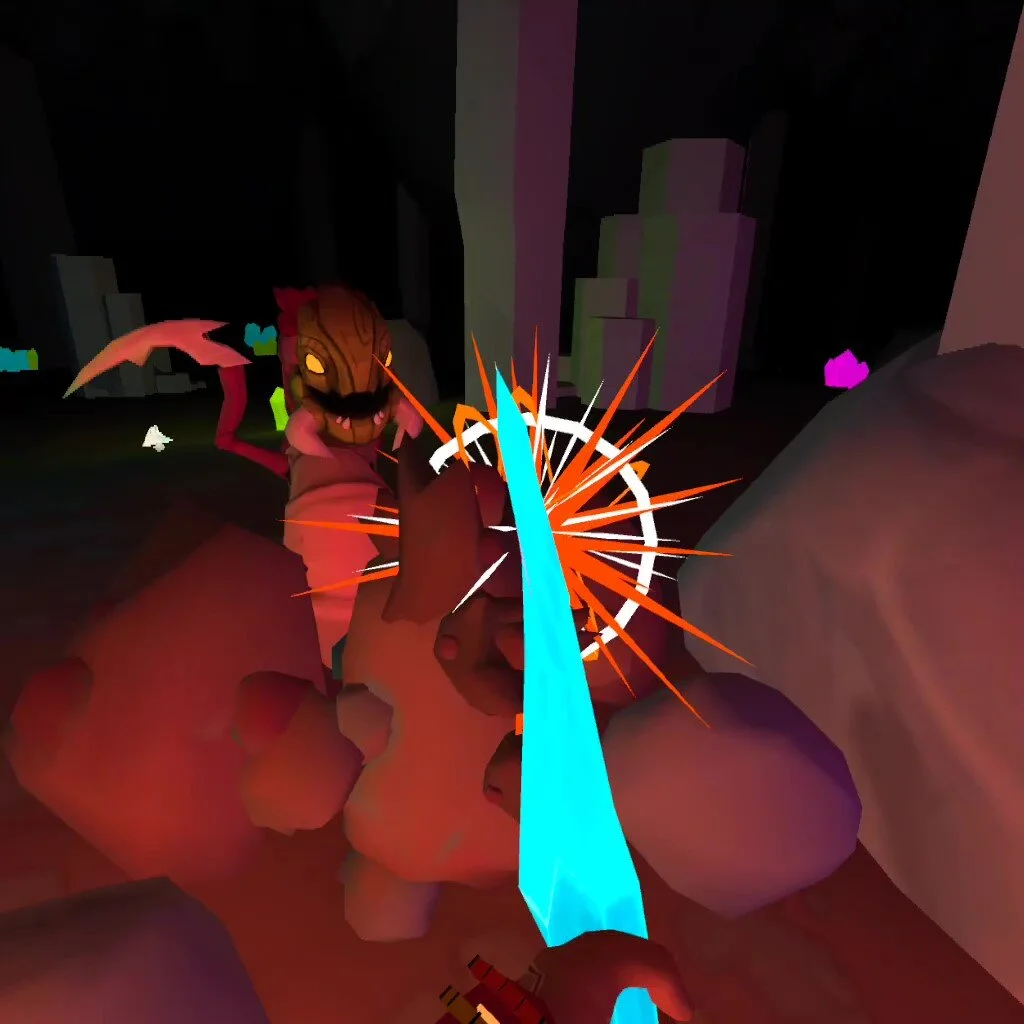
It seems dangerous at first, but really it’s all sunshine and unicorns up on the first few levels. Well, there’s no sunshine, but you know what I mean. The mushrooms aren’t even poisonous. The Turabadas are generally the little, adorable kind easily taken down with a few hits. Further down though, they get big and beefy. Unless you’ve got a few of those little grenades on you or some dynamite you better hope you block their giant craggy fists or you might find yourself back in town with all of your best gear sitting down in the pitch black somewhere. Sometimes you just have to call it quits and throw a teleport potion at your feet.

Get a little further down and you hit the crystal caverns. Wow are they are beautiful. There’s light in the darkness here, and I felt like I could see for miles. Still, it gets more dangerous the deeper you go. Crystal Wyrms, more big Rock Monsters. My heart was racing the first time I made it that far. All in the search of that sweet, sweet iron and gold.
I was sweating. A Township Tale isn’t a particularly intense VR experience most of the time, but after an hour in the mines my headset was drenched. Partly from swinging swords and picks and partly from the excitement of it all. I got my iron. I got my gold. More awaits down in the depths. A seemingly infinite amount to be had in the darkness, and the thrill of acquiring it.
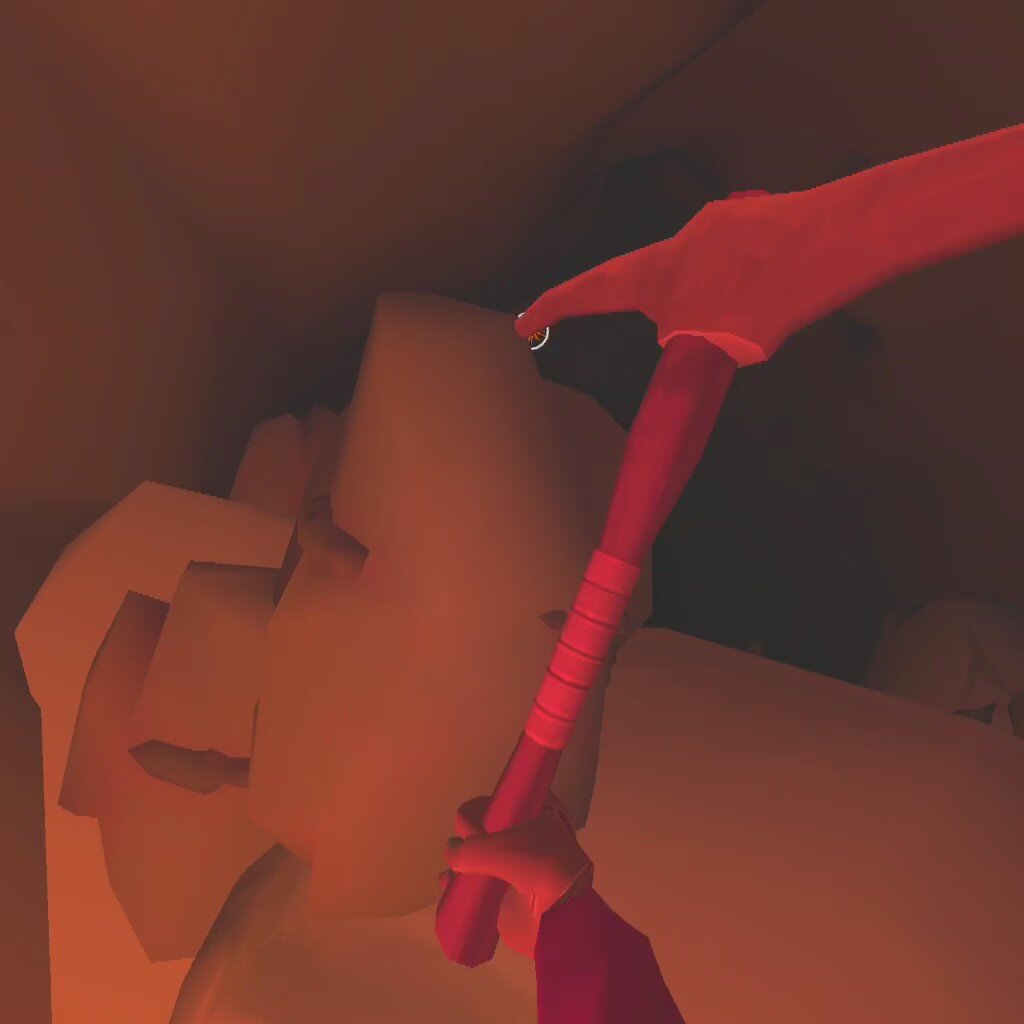
A Township Tale opens up to danger and adventure in the Mines, and making that sword you’ll need to keep the Wyrms off your back has special significance when it saves your life later on. It’s the beauty of any crafting system. Create the things you need to make your way to the hallmarks of victory. The Mines contain those hallmarks. Iron, gold, loot. All the things you want to make the things that will get you more of what you want.
More than anything I wanted some excitement, and I found that in the Mines. I will continue to find it as I delve deeper and deeper, always searching for the next big find. The next treasure always elusively a few floors down, guarded by whatever terrors lie in the depths.

How Does Onward’s Singleplayer Hold Up?
Onward does give you the ability to play against bot enemies on any of its Multiplayer maps. However, Onward’s Singleplayer mode is often overlooked. Why is that? Is Onward worthy of being considered a Singleplayer title as well as a Multiplayer one?

Want to watch this article instead of read it? Check the video version out on the Reality Remake Youtube Channel!
Onward is a slow paced tactical shooter by Downpour Interactive. Generally when you hear about Onward, you hear about the Multiplayer mode. Tense firefights where a single well placed shot can mean victory or demise. A great VOIP system done via local chat and an in game radio your entire team can hear. Small team combat where caution and quickness mean victory. Fun stuff for those so inclined, and if that is what you are looking for in a VR shooter then Onward is definitely your game. Especially on the Oculus Quest 2, with no cord to encumber the player, it is one hell of an experience when compared to shooters on more traditional platforms.
Onward does give you the ability to play against bot enemies on any of its Multiplayer maps. However, Onward’s Singleplayer mode is often overlooked. Why is that? Is Onward worthy of being considered a Singleplayer title as well as a Multiplayer one?
Oh, and in addition to the game modes listed here Onward recently added the Mercenary Game Mode!
Mode #1: Hunt
There are two Singleplayer modes in Onward, Hunt and Evac, which come in a range of difficulty modes. Hunt is straightforward. A certain amount of enemies, selected before the start button is pressed, are spawned on the map. Shoot them all to death to win.
Just as in a Multiplayer game of Onward you can select your loadout for the fight, but this time with a whopping 18 points to work with. Grab some night vision, body armor, all the attachments you could want. Go nuts. Singleplayer is a great place to have fun with equipment you might not try in Multiplayer, or to find out which weapons you like the most.

Hunt matches tend to follow a formula. Wander around for a little while until you encounter enemies, they always come in pairs of twos. Shoot them, and all of your AI opponents on the map are alerted to exactly what your position is, and will come straight for you. Here there are basically two options. Either hold your ground and try to shoot all of them before they overwhelm or flank you. Otherwise run away and try to ambush them while they close in on the last noise you made, rinse and repeat until either you lose a gunfight or all of the enemies are deceased.

Standing your ground is straightforward, and if all of the AI enemies come at you from one direction, can be awfully easy. Running and gunning is definitely more challenging, and it can be very fun to trick the AI by shooting from one position, scrambling to another, and shooting them in the back while they run to where they think you are.

All in all Hunt is straightforward. You can jack up the amount of enemies and put them on Rookie mode to have a fun time mowing them down in masses, or turn their difficulty to the maximum and see if you can outshoot them without dying instantly. Be careful if there are too few enemies on the map. You may end up wandering in circles trying to find where they spawned, and it is tedious.
Also be mindful of your ammunition. Onward doesn’t let you know how many bullets are left in a magazine, and when against a lot of enemies it is awfully easy to run out of rounds before they run out of bodies to throw at you. There are some stashes around the maps with spares, but not many.

Mode #2: Evac
Evac’s premise is much more interesting than Hunt. Where in Hunt you are meant to wipe out all of the enemies, in Evac they are infinite, and they are there to wipe out you. When starting an Evac game you will be placed in one of a few predetermined locations on the map, and after a brief minute pairs of enemies will spawn around you and immediately close in on your position.

Hold out for long enough and a Helicopter will fly in. Now enemies that spawn will run towards the Helicopter to cut you off. You need to change up your plan and run away from the defensible position you’ve been hiding in. Go too quickly and you might get shot down while in the open. Go too slowly and more enemies will spawn, making your trip that much harder.

Make it into the Helicopter to escape and win.

Evac definitely has more creativity to it than Hunt does. There are two distinct sections of the game, hold out, and then run to safety, with different ways of approaching them. Early on you can roam around as you might in Hunt, trying to hide more than fight, or hunker down in a good spot and let your opponents come at you. When running to the chopper you can try to make it there quickly, or carefully clear corners and methodically make your way there. Whether you are low on ammunition might also help this decision.
Either way it can all be over in an instant, so every move counts. In this way Onward’s Singleplayer is similar to its Multiplayer modes. The shooting is tense and over quickly, so quick shots and quick reflexes are King. The AI opponents, depending on their difficulty, can also not hit the broad side of a barn, or accurately give you a lobotomy at a thousand yards.
The AI
Speaking of that AI, they will see you extremely quickly, even when the whole map isn’t alerted after the first shots are fired. Onward’s Singleplayer is just as much as test of reflexes and shooting skill as in Multiplayer, the opponents are just much worse at taking cover and acting tactically. Generally they will just walk straight towards where they think you are, and stand still while firing once they see you. They’re not very clever, and often will just walk right to where you are clearly waiting in ambush.

Their strength is in their numbers and their ability to surprise you from behind, because you have nobody to watch your back. Their other strength is to occasionally shoot you with instant precision. It really depends, and sometimes feels a little cheap. All in all they show no tactics and coordination. Their weapons also vary, though any weapon can hit you reliably at any range. It comes down to the difficulty selection. Rookie is ridiculously easy, but even Experienced can cause instant death.
Maps
The experience of Singleplayer Onward can vary, just as in Multiplayer, on which map you pick. Some, like Downfall, will heavily emphasize long ranged fighting due to it being so large and with few sight obstacles.

Others, like Subway, Cargo, or Suburbia, are very claustrophobic and much more entertaining for quick and up close gunplay. Picking the right map for how you want to play the game is very important. Otherwise you might bring an MP5 to an SKS fight.

In Conclusion/TLDR
At the end of the day there’s some fun to be had in Onward’s Singleplayer modes, but that well dries up quickly. With only two modes to play and uninteresting AI opponents it has difficulty standing up on its own. On the other hand it is a great place to play with loadouts and possibly have a bit of Onward’s superb shooting when you don’t have the time or patience for Multiplayer. It’s also great practice for reflexes and shooting accurately.
Though at the end of the day it only really serves as practice for the core of the game, Multiplayer. Onward is a Multiplayer focused game and that is where it truly shines.
Having trouble sweating through your headset’s face cover? Try out new ones from VR Cover that repel sweat and are easy to swap in.
Onward is available on Steam as well as the Oculus Store for 24.99. Updates are often added to the game including new Maps and other options. Maybe one day there will be more to Singleplayer, but not for now.

A Township Tale: How To Play Solo
A Township Tale, which recently released on the Oculus Quest, is meant to be a Mulitplayer RPG experience. The Developers say that it is meant to be played that way. The mechanics clearly show that a lot of hands are meant to work together to achieve the goals of a burgeoning town in a fantasy wilderness. Crafting items, cooking food, collecting resources, fighting monsters, all of these things are meant to be specialized roles that players can excel at. In the end it seems that the goal of the mechanics of A Township Tale is to create a specialized labor economy of sorts. A fun specialized labor economy, but specialized non the less. The experience system also lends itself to that. Do one thing more, get more perks and abilities that help to do that one thing.

A Video version of this article can be found on the Reality Remake Youtube Channel.
A Township Tale, which recently released on the Oculus Quest, is meant to be a Mulitplayer RPG experience. The Developers say that it is meant to be played that way. The mechanics clearly show that a lot of hands are meant to work together to achieve the goals of a burgeoning town in a fantasy wilderness. Crafting items, cooking food, collecting resources, fighting monsters, all of these things are meant to be specialized roles that players can excel at. In the end it seems that the goal of the mechanics of A Township Tale is to create a specialized labor economy of sorts. A fun specialized labor economy, but specialized none the less. The experience system also lends itself to that. Do one thing more, get more perks and abilities that help to do that one thing.

What if that’s not your bag? What if you don’t like to play with others, or don’t know anyone you would like to play the game with, or would find the experience of exploring and building a town more relaxing on your own? Is A Township Tale simply not for you? If you’d like to find others to play the game with, just join a server, or look on the Reddit page. There are loads of people willing to teach you the game and have a fun time in it. For those who prefer solo play, we will answer those questions here, and possibly show you a path forward to a, if not bustling, at least well constructed Township.
Note that this article is for the Oculus Quest version of the game, which does not currently have the same features as the PCVR version.
The Learning Curve
As we have already covered here at Reality Remake, A Township Tale has horrible tutorials. A lot of what you need to know will be covered here, but if you ever get stuck on how to do anything and just can’t figure it out, do yourself a favor and watch a youtube video about it, or read the wiki. These resources are invaluable for figuring out the crafting professions. Gathering and fighting are much more intuitive, and relatable to other VR games.
If you would rather leave some mystery in the world, then we won’t spoil too much here.

A New World
So you spawn into your new world, wide eyed and bushy tailed. Ah the possibilities, the adventures in store for you. Nothing but you, the open world, an an experience to enjoy. There are sticks, stones, and pieces of flint littered about. All of the resources for basic tools are abundant. There are even pots and crates around, which you can smash open for more limited resources. It’s a great time to wander about and get your bearings. Oh, and watch out for the birds.

Soon enough you’ll have wandered through all of the buildings of your Township. You may even come across the mines, or blocked passages and unbuilt bridges. There seems to be so much to do, but where to start? Well, as much as you might dream of wandering into untamed wilderness right off the bat, there are things to be done first to acquire the proper tools in order to do so without death or worse, a serious lack of inventory slots to hold that sweet, sweet treasure.

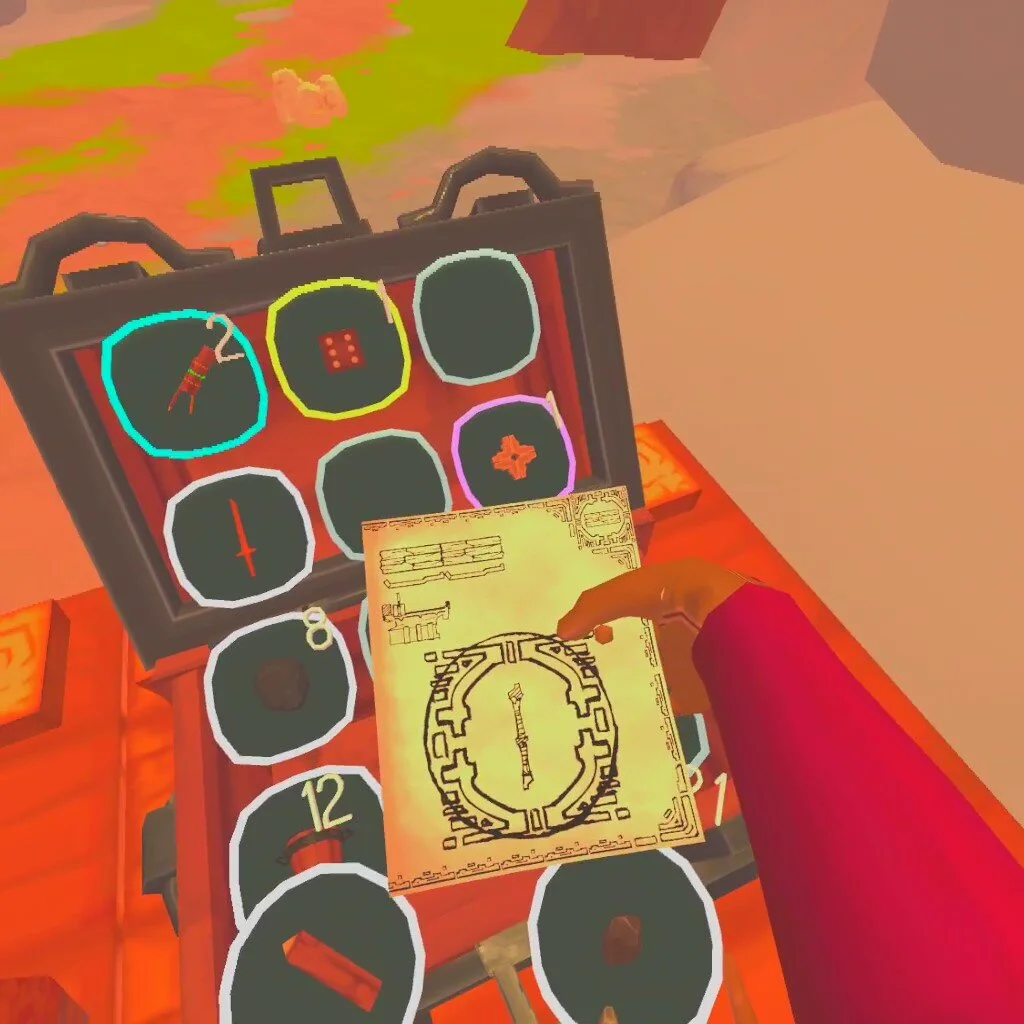
Keep an eye out for any treasure chests you find, and visit them often. They can spawn useful items that you can’t make yourself yet. More importantly they also spawn book pages and metal molds to expand your crafting and gathering capabilities.
VR Survival, but still Survival
Early on in survival games there are two things which always limit a player and either make work much slower, or make areas harder or impossible to explore. Those two things are equipment and inventory slots. The grass backpack you begin with can hold six items, and your belt can hold 4 for a measly total of 10. If you’ve broken any of those pots while exploring your Township you will already feel the pain of leaving useful items scattered around, and needing to run back and forth to store them all. Without a team of other players, quickly cutting down on running around storing things is a top priority. Luckily one of the few recipes you begin with is to create a leather backpack, which holds 9 slots instead of 6.
Priority #1: Stay Fed
First things first though. You have a hunger bar and you need to eat. Time to rustle up some food. You might remember those birds from earlier. Well get your favorite rusty tool or rock on a stick and get to bashing.

The birds will drop meat, an easy way to get nutrients and a full belly. No need for cauldrons or pots, just toss those pieces of meat near an open flame until they smoke and eventually turn brown. Carry them with you, and eat anywhere on the go. Of course that will take an inventory slot, but now it’s time to lessen that particular problem.

Priority #2: A Better Backpack
While you’re walking around town, smashing pots and crates, there are a bevy of useful items that you cannot attain in any other way which you will find. The three you will need most of all to start with are metal buckles, leather straps, and the differently colored rolls of leather.
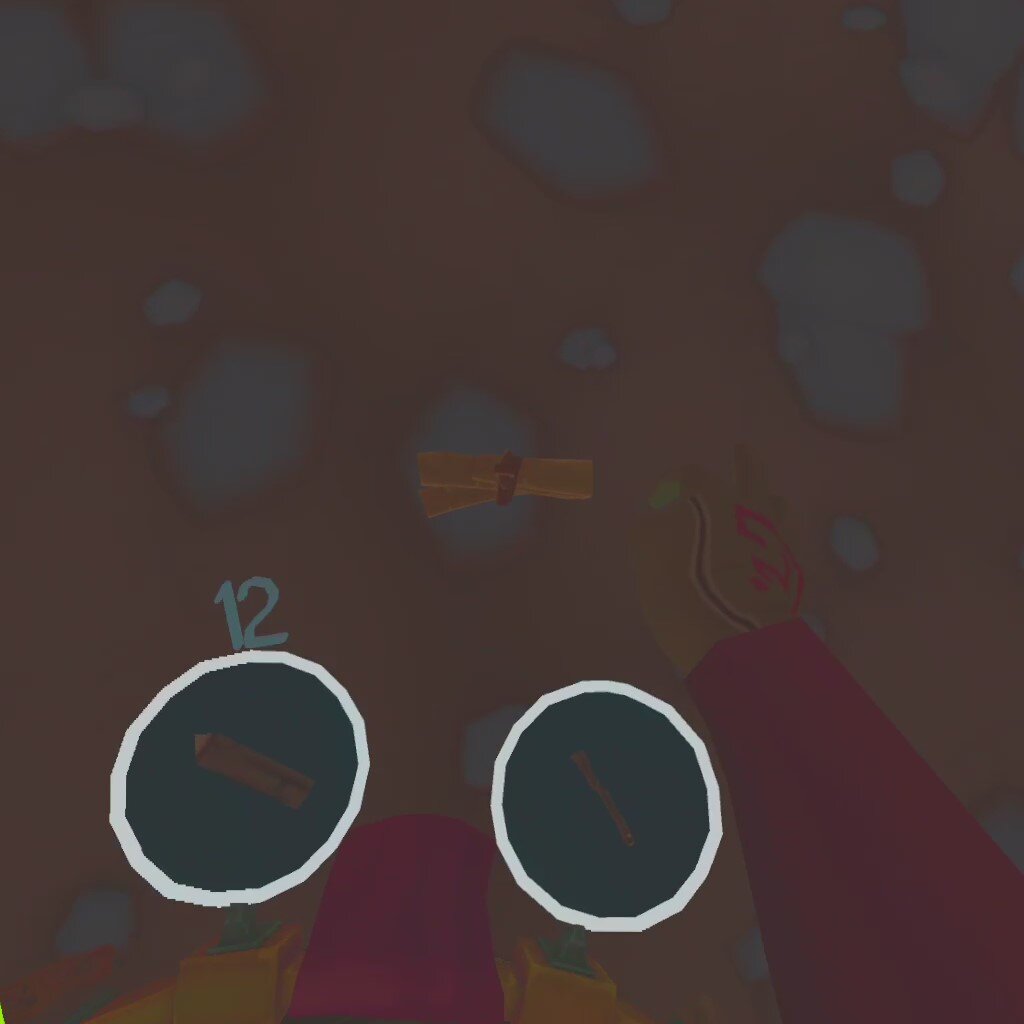
You will need at a minimum 2 leather rolls, 7 leather straps, and 11 metal buckles. Bring as many of these as you can find before you begin, especially the straps and buckles. You will probably break some of them. If you thought making the grass and sticks backpack in the tutorial was hard, then making this new backpack brings a whole new challenge. That is, not breaking pieces off of it when you are hammering in nails.

Hammering in nails is an art and a science. You must hit them directly. Not too hard, not too soft. Too hard and you damage the new piece that you are nailing in. Too soft and your blow will have no effect. If you make too many mistakes before hammering in a single nail you can always remove and re-add the piece to bring it up to full health. If you hammer in a single nail then you have to either hammer them all in successfully, wait for the piece to pop off by itself, or keep going until you either succeed or break it. Some of these pieces require a lot of nails, so being careful and precise is key. If you tend to hit too hard, use a rock on a stick. If you tend to hit too soft, then one of the many rusty hammers lying around may be easier. There should be plenty of the required pieces around town to make a single backpack.

You will want to save your old backpack in case you perish somewhere (for instance, deep in the mines) with your brand new one. Be careful just leaving it laying around as it may disappear.
With that done, what to do next? Well we’ll tell you.
Gating by Labor
A Township Tale gates off new areas not by requiring a certain item to progress, ala the Zelda series, or purely by placing enemies in your way which are difficult to progress past without better equipment. No, A Township Tale prevents your access to new areas via Labor. To build a bridge to a new zone you will need to add the materials necessary in order to build it. You will need a lot of these materials. Without anybody else to rely on to assist in getting them you will want to collect them as efficiently as possible. A piece of flint attached to a stick will work, but it will be slow. So naturally you will want to acquire better tools as quickly as possible, and the ability to make more when they break.
Priority #3: Better Tools
There are two buildings in the town that you cannot access right from the start. The Woodcutter’s hut and the Blacksmith. The Blacksmith is needed to make metal tools, though metal ore is freely available. Unfortunately, a whopping amount of wood is needed to build the stairs that lead to the Blacksmith.

So alright, just need to go cut down some trees and off we are to the world of advanced tools. Well no, there are only decorative trees in the town. The trees that can be chopped down in order to get such a large supply of wood are gated behind another labor wall. The first one you likely came across actually, a bridge to the forest near the starting spawn.

So it’s time to do some mining, and not for the stones you’ve been pulling out of the ground. You need white stones, also called sandstone, which are only found by mining nodes and occasionally some small amount in chests. Luckily you won’t need to do it all with a piece of flint on a stick. A fresh server will include a pick axe head and handle right next to the chest in front of the entrance to the mines. Just combine them and you’ve got the perfect tool to quickly acquire the white stone needed to build that bridge. You can also get some Copper and Coal while you’re at it. Saving any grey stones you find is also a good idea, as you will need a wagonload of those later on.
A good deal of all of these can be found without even entering the mine, just around the entrance. It is easier to break open a bunch of rocks at once, and then bend over and pick up all of the stones and ores in one swoop. If you thoroughly explore the entire overworld you can find all of the white stone needed to build the bridge, just barely. Otherwise you will need to stop down into the Mines. If you’d like to shake things up with a little adventure and danger, then definitely go into the Mines.
The Mines
The mines are very, very dark. Your torches will go out, and if you don’t like to put your torch on the ground while you’re swinging your pick, you can put a piece of dry grass on top of a flint on a stick and have light and mining capability in a single tool. Slow mining capability, but still. Since the way down is long and you may need a quick escape, you may want to bring one of the purple teleport potions if you’ve found one in your earlier exploration.
There is also a chest just inside the entrance, and as with all chests it is best to check it periodically for new items and recipes. If you want those sweet ores and white stones though, you’ll need to go down an ominous staircase to the first level of the mines.

The darkness swallows you in the depths. Sound echoes off of the walls. You will hear scraping coming from further within. Unless you’re really ready for a fight then don’t go too deep. The Rock Monsters hit like trucks and can take a beating. Gather the white stones first and foremost, and try to leave with your skin intact. There are also some chests and crates to be looted as well. If you have the stomach to go deeper, that is.

Off to be a Woodsman
When you have collected the white stones necessary to build the bridge, then congratulations. You’ve passed your first labor gate. It will get easier. Just put the rocks in the chest and watch as magic assembles your way forward.

Further in you will find the Woodcutter’s Hut, and a bevy of rusted tools laying about. Don’t bother with them. A proper axe is tucked into a log down the path. As with the pickaxe earlier this will make gathering a lot faster. You can see that some trees have different bark, and tend to stand up a little straighter than the decorative trees you’ve seen thus far. These can be chopped down just like the ones in the tutorial. Also make sure to bring a shield, as big a shield as you have found. Some of the trees will fight back.
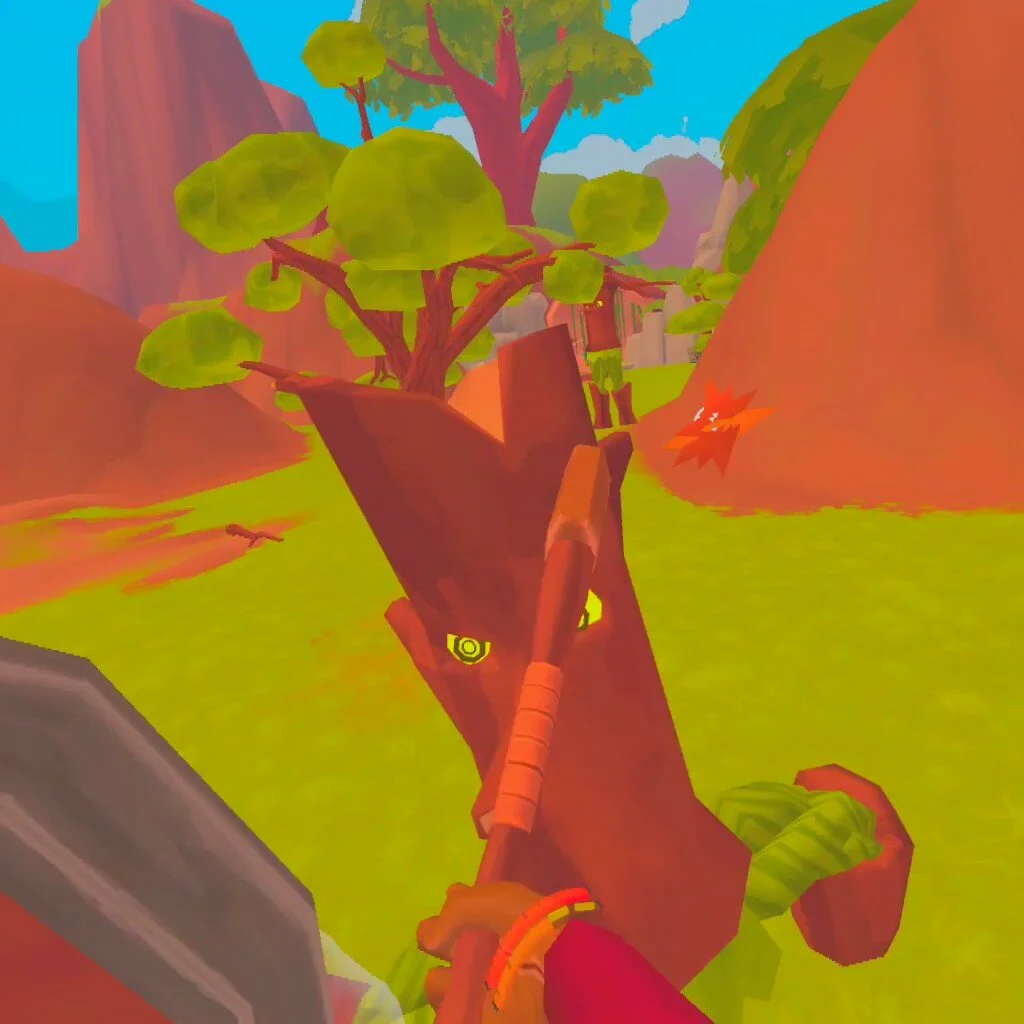
The first big area containing a lot of harvestable trees will also have a large amount of these enemies. The first couple of trees can be harvested without attracting their attention, but the quickest way to get the lumber needed to access the Blacksmith is to take them out. Hope you brought your shield, because they like to shoot spores at you. Hold your shield up to block the spores, and whack them with your axe. Also, being made of wood, they will drop wood as well, along with some strange spores. Might as well take all of them. With the creatures gone and a few large trees chopped into wedges, you should have more than enough to build the staircase to the Blacksmith.

Congratulations once more! You’ve cleared the second labor gate and can now access every crafting building in the town. A world of new tools and weapons awaits you.
More to Come
Reality Remake isn’t done with A Township Tale yet. For the followup to this article we have another guide on How to Make Metal Weapons and Tools Solo as well. Now that you’ve gone through all of this effort to gain access to the Blacksmith, it’s time to make use of it.
Anyone who wants to follow this guide, but hasn’t played yet, can buy A Township Tale on Oculus Quest for 9.99 or play for free on PCVR.