

Zenith: The Last City VR - Day One as a Brand New Player
The VR MMORPG Zenith: The Last City finally released on January 27, 2022 to much hype. It has been compared to a real life equivalent to the anime Sword Art: Online and that comparison is not entirely without merit. The experience of interacting with other adventurers and flying around Zenith’s beautiful world in Virtual Reality is unparalleled. Now it’s your turn to get a look into what could be the future of the MMO genre. Here’s Reality Remake’s first day in Zenith: The Last City.

The VR MMORPG Zenith: The Last City finally released on January 27, 2022 to much hype. It has been compared to a real life equivalent to the anime Sword Art: Online and that comparison is not entirely without merit. The experience of interacting with other adventurers and flying around Zenith’s beautiful world in Virtual Reality is unparalleled. Now it’s your turn to get a look into what could be the future of the MMO genre. Here’s Reality Remake’s first day in Zenith: The Last City.
The Undercity
As with traditional MMOs a character must be made in order to play the game, and a class selected. I make myself a Blade Master Tank. In Zenith there are two classes, Blade Masters for up close fighting and Essence Mages for ranged attacks. Each class comes in DPS, Tank, and Support varieties. To me, a sword fighting tank makes a lot of sense. If I have to get close to enemies I like to be the sort of class that can take a lot of damage and keep swinging.
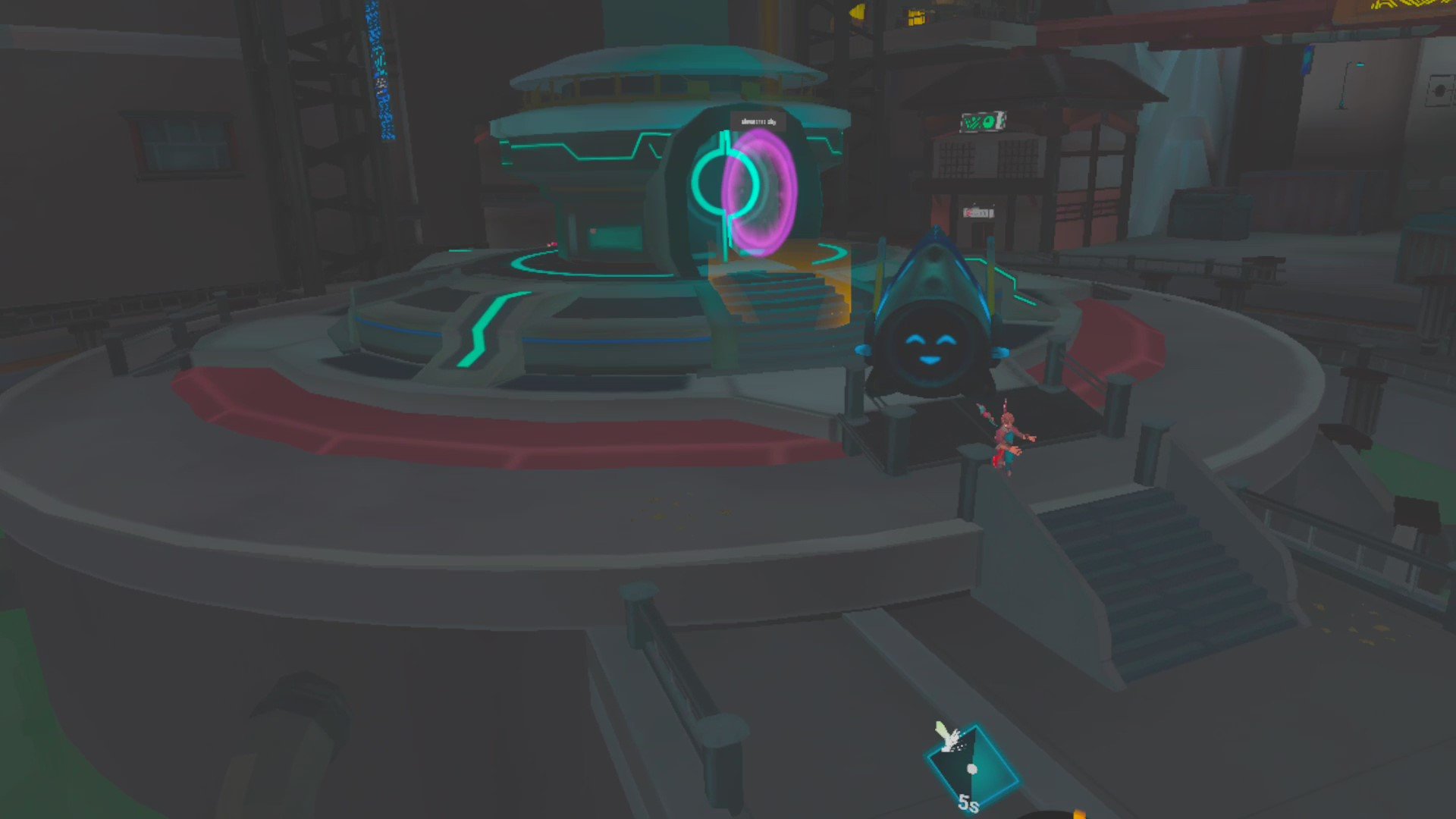
The starting spawn is somewhere underground. A techno-futuristic façade of holographic billboards, storage containers, and metal walkways greets me. A robot companion of sorts, the tutorial explainer character, pops up and says something uninteresting about Aether Fushion before instructing me to walk over to a quest-giver. I oblige.
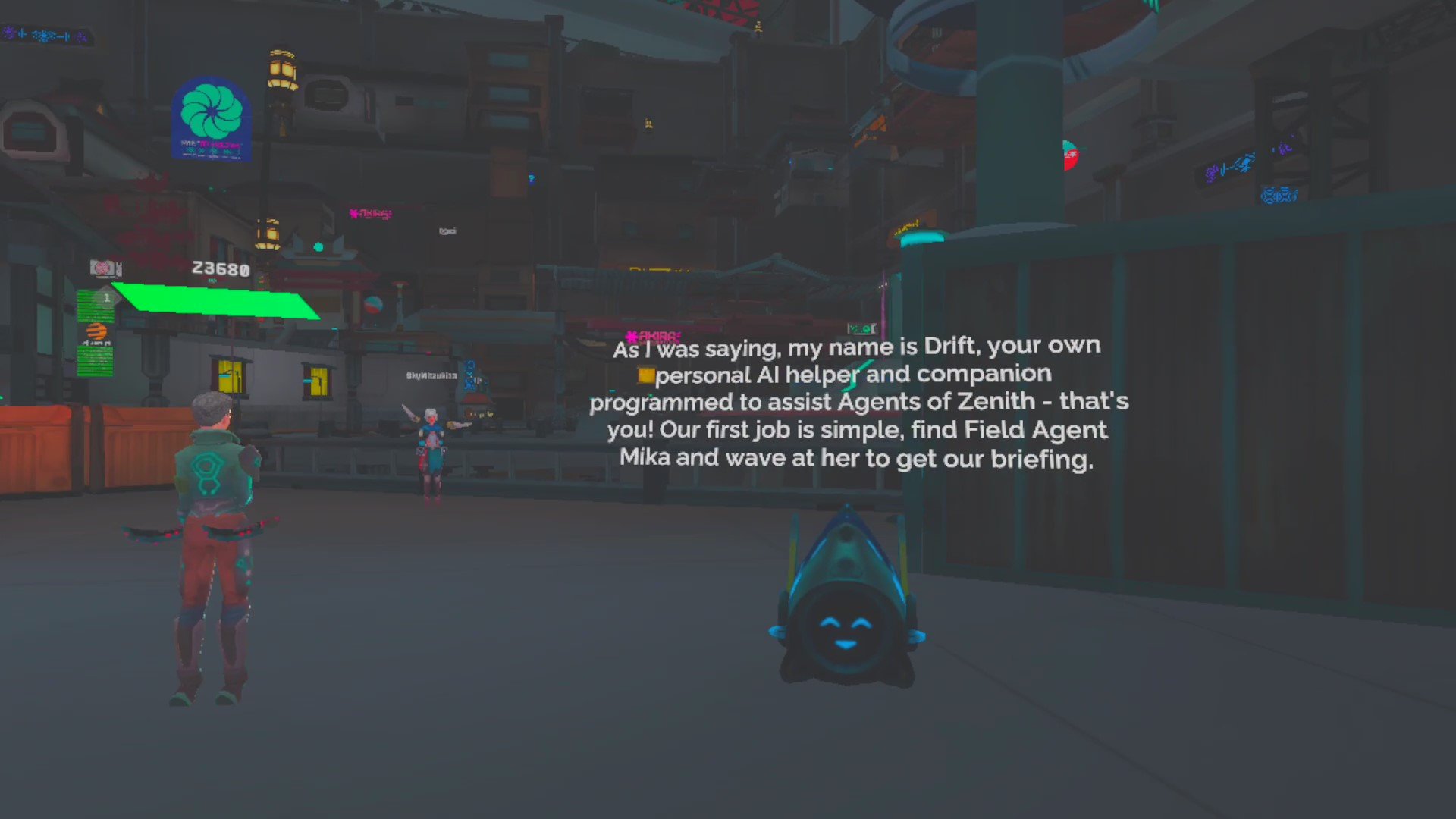
At the first quest giver, a woman dressed in a military uniform of an extremely bright greenish blue color, the robot tells me to wave at her to get a quest. This is interesting, a fun use of VR hands to interact with an NPC in a slightly lifelike manner. OrbusVR: Reborn, the only other game that could be considered a VRMMORPG, does the same thing. Remembering that OrbusVR plays like Everquest 1 in Virtual Reality with just as much confusion and jank as that ancient game, I definitely hoped that would be the extent of inspiration used in Zenith from that older title.
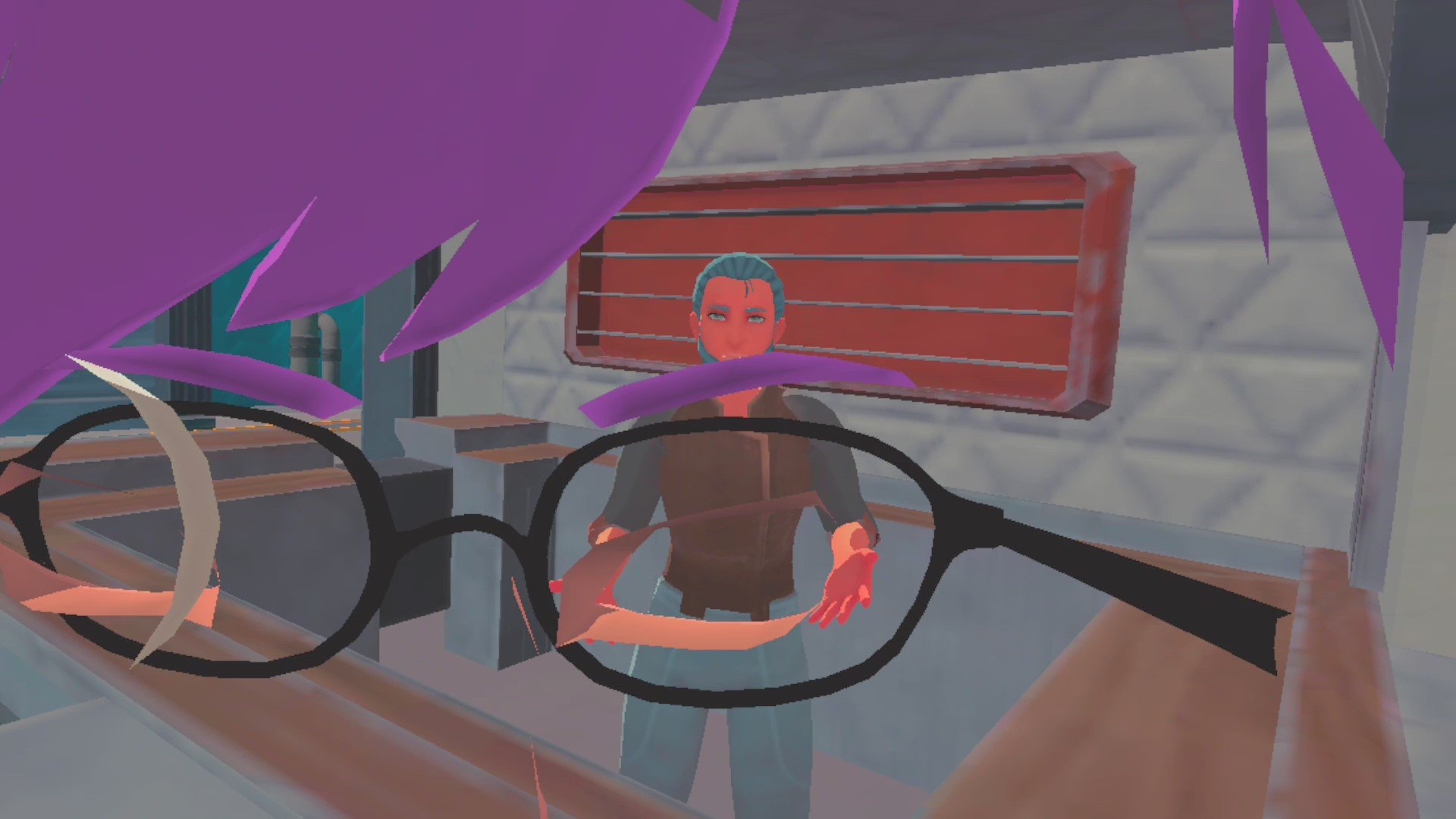
It is when I’m waving for the first time that I realize that something is wrong. I’m moving my hand… but there is no hand in front of me. I look down, confused, to see…
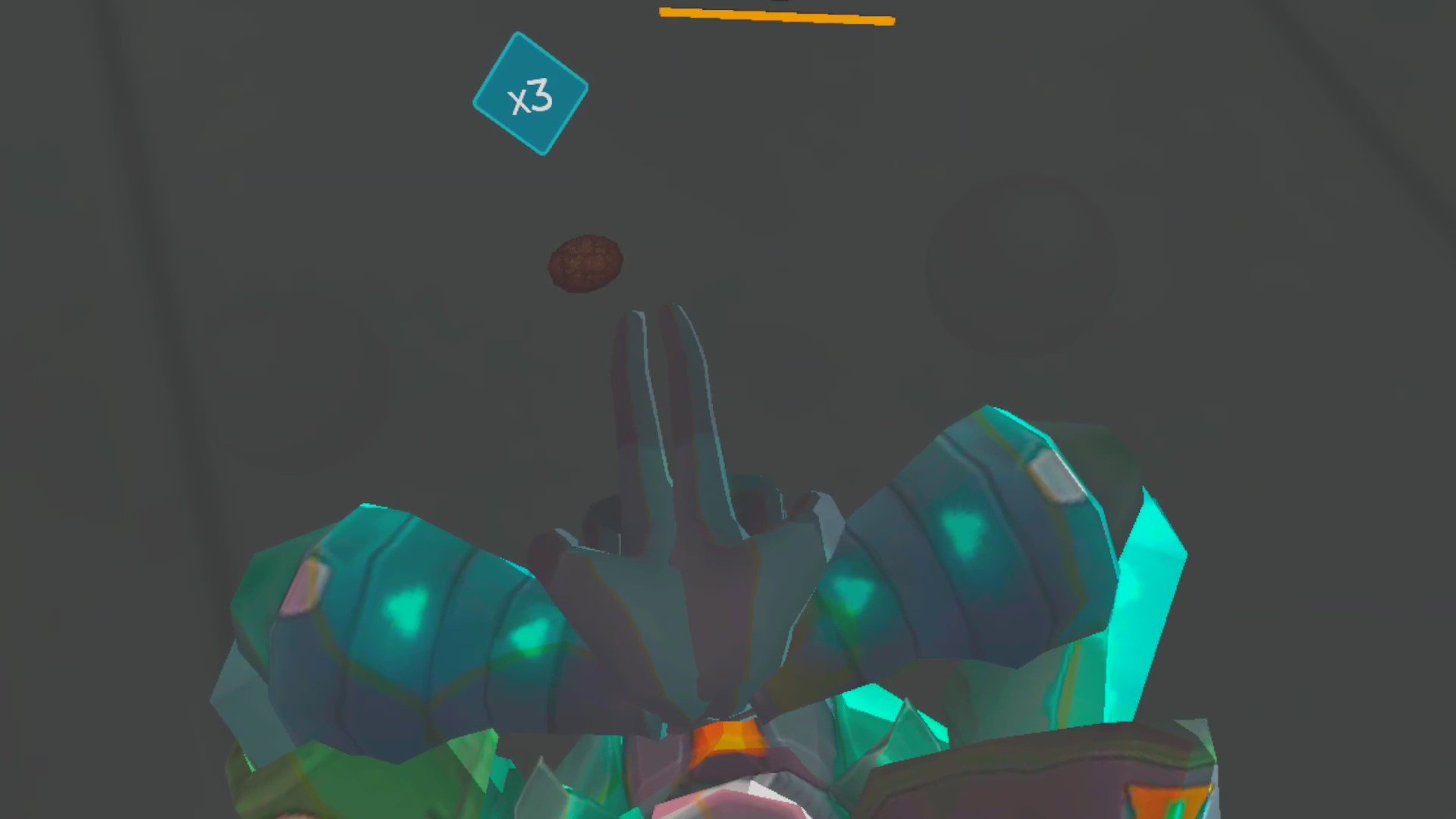
Seems my virtual body isn’t catching up with my physical movements. Pretty early to run into a bug, but this is not only the launch day of an MMO, but an MMO in Virtual Reality. Both genres tend to attract bugs, and together… well let’s just say I don’t envy the QA team on this one. I log out, log back in, and my body is restored. An easy fix.

The questgiver tells me to destroy some Chimerats, or whatever they are called. I am in no hurry, and wander around, taking in the sight of the black steel surroundings and wave at the crowds of other new players. After realizing that I should probably start doing some quests, I realize that I don’t know which direction that quest is in. Nearby a pink portal of sorts leading into a spire I see a level 6 player. Wow! Such a high level, the game had just launched hours before. I asked him for directions. He is very friendly, and leads me past the quest giver to the first enemies of the game.

The robot buzzes some lore in my ear and tries to give me some pointers on combat, but his advice is nothing compared to what my new friend is saying. He explains the combat to me. It’s a straightforward system. Swing and hit an enemy with my sword to do damage. Hold down trigger for a little while before swinging to do a more damaging attack, or to block. Damage is done on impact, but I have to wait to swing again before the impact will do significant damage. No Fallout 4 VR or The Elder Scrolls 5: Skyrim - VR jiggle waving of weapons to deal full attack damage 20 times in the span of a second.
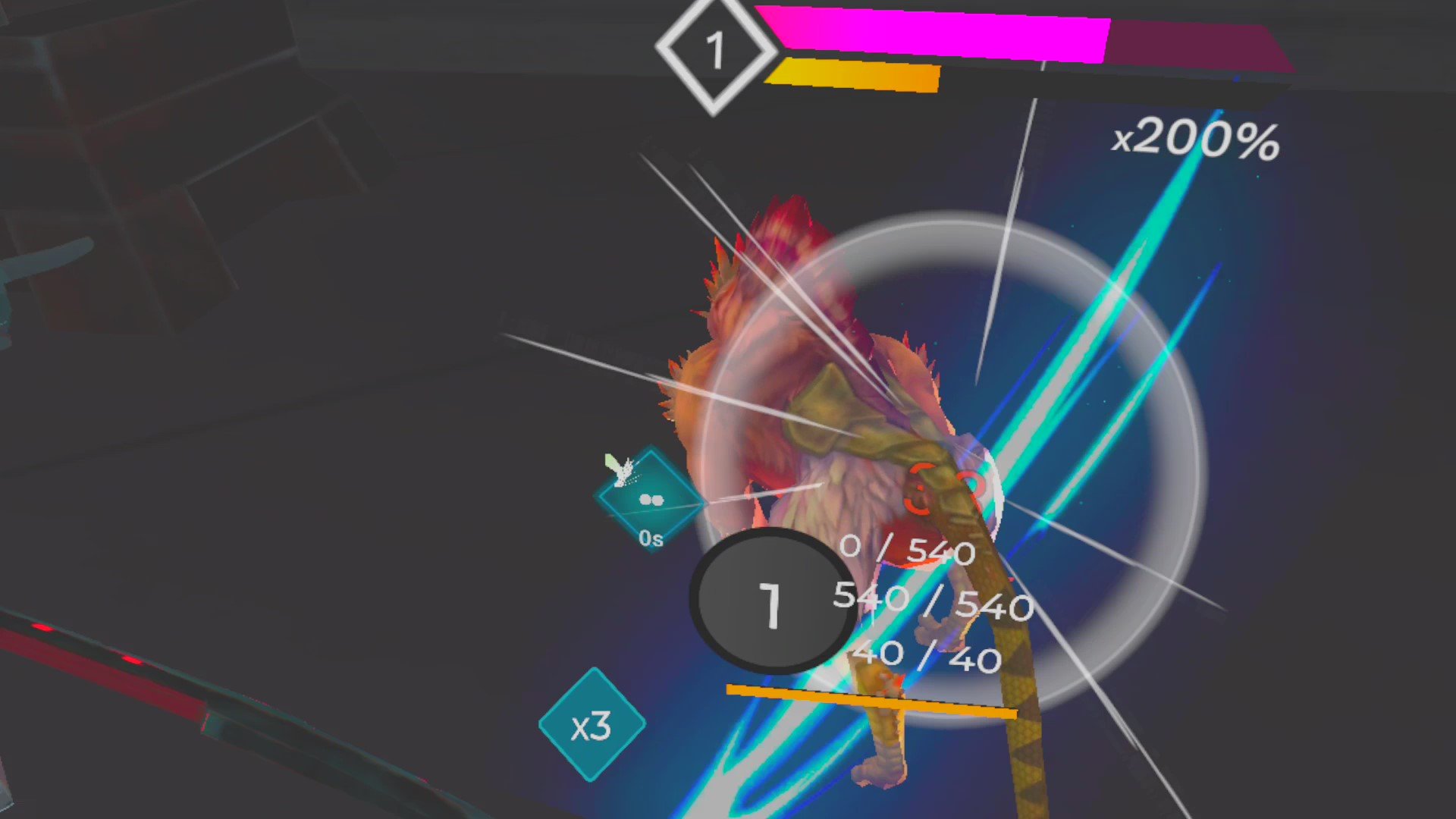
The combat is fun and fast. I join in with other players wandering around and fighting the chimera rat dog things. I slay quite a few in a haze of glee as my companion inundates me with knowledge. His passion for the game is infectious and so he is extremely happy to tell me everything he knows. He’s waiting for some friends to party up with, but happily explains the game better than the tutorial can as I go through the first quests. So we go on to the next one, given by another NPC in a very cool gas mask, time for the climbing tutorial. They didn’t even give this poor guy a name.

I tune out the robot as my companion tells me a thing or two about flying. I climb and jump off the nearby ledges and obstacles. The experience of flying in Zenith is… liberating. It’s better than flying, or more technically gliding, in any other game. The reason why? A thing called sensitive gliding.

Basically, sensitive gliding is a simulation of air gliding over your arms like an airfoil on a plane. Tilt your wrists forward and you will go faster and downwards. Tilt your wrists back and you’ll go slower and glide upwards. It sounds simple, but it makes the basic gliding system found in Population: One look like it was invented in the stone age. Gliding in Zenith is easy to learn and hard to master, but most of all it is fun. Oh, but sensitive gliding isn’t on by default. You’ll need to go to your settings and change it.
I continue to forget that I am standing on my living room carpet with a big piece of silicon and plastic over my face as I glide through the air like a bird. There is a big crowd of people all laughing and flying around enjoying themselves. I wonder what this place will seem like when Zenith is a little older and most players aren’t new. For now I just enjoy it.
All of my quests under the ground are completed. Time to go up in the big pink portal and see what is in store in the city proper. My friend and I say our goodbyes. He is busy assembling his group and I am thankful for his advice. I hope everyone runs into someone like him when starting this game.
Out of the Tutorial and Into the World
The sun is bright on the futuristic billboards and clean steel high rises of the capital city of Zenith. It is a very vibrant place. The more modern architecture gives way to green trees and grass, Japanese torii gates, and a big crystal of unknown purpose.

Of course the brightly colored quest giver is back again. She tells us to walk out of the beautiful city I just found myself in. I oblige while giving my surroundings forlorn glances. I had hoped I could spend more time in the city itself, but it seems I am destined to just walk through it briefly. It seems like a waste for such a nice place. I cheer myself up by messing around with and standing inside one of the uninteractable NPCs that litter the place.
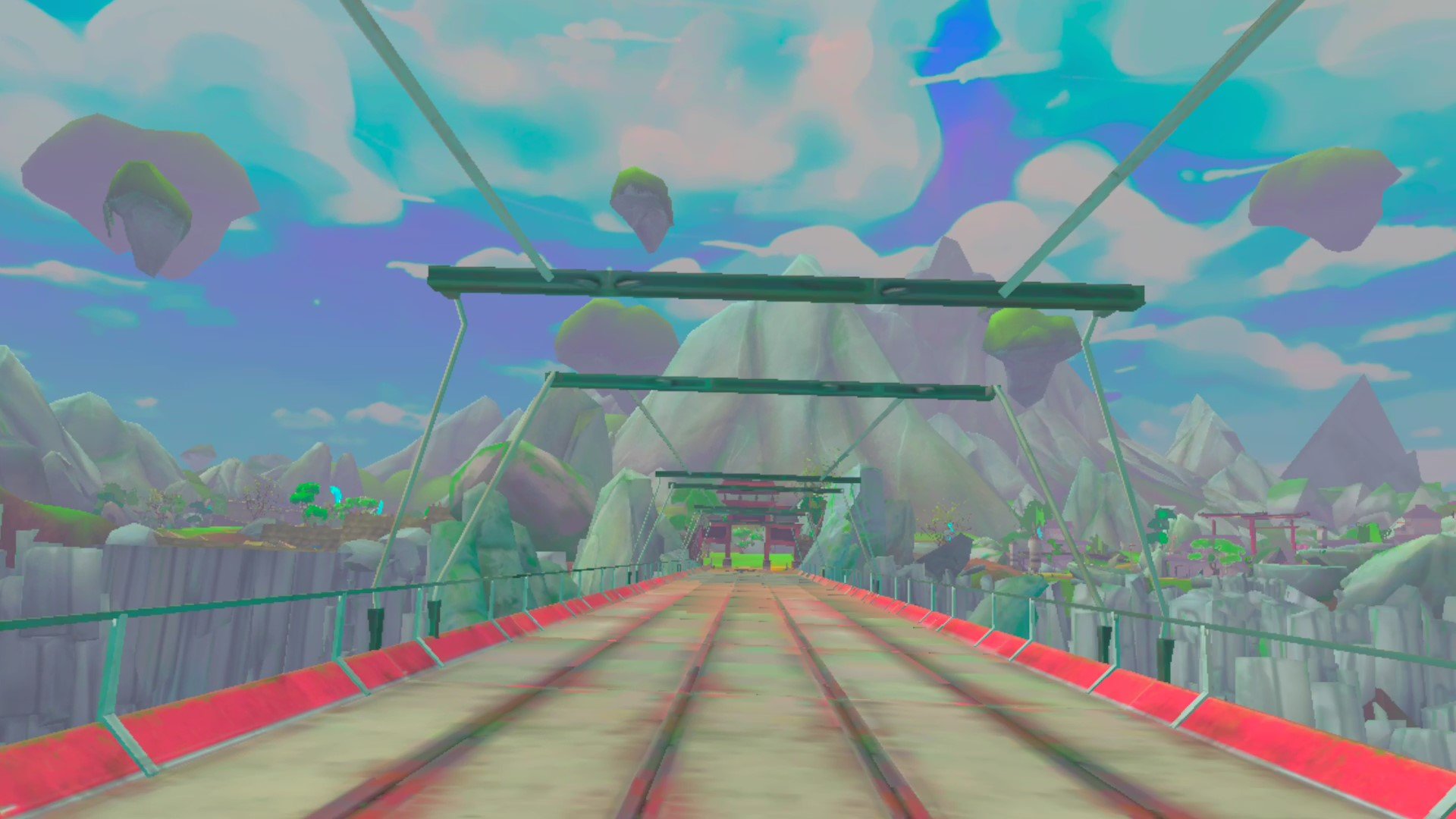
Outside the main gate of the big city is a beautiful bridge, and in the distance verdant green fields, tall mountains, and floating rocks. The very smell of adventure and opportunity permeates my living room, which I still have not remembered I am standing in.
Across the river is the smartly dressed questgiver once again, and a whole crowd of people. I get a quest to defeat some Sylphids. Unlike previous opponents they are humanoid and carry actual weapons. A more interesting enemy. There are huge crowds of people around fighting them. I spend some time just swinging at the new enemies and mingling with other players. It’s a good bit of fun.

There’s even a quest to glide off of a local tower and onto some scaffolding nearby. The open world finally starts to open up at this point, and the freedom of movement in Zenith: The Last City becomes apparent. Dashing around and gliding from place to place beats just holding a thumbstick down to travel any day. I try out the DPS version of Blade Master class on for size as well. The only permanent choice for each character is whether they are a Blade Master or Essence Mage. Otherwise anyone can switch between roles as they please. Though each role must be levelled separately starting from one. Oh, and somewhere along the way I gain a level as a DPS.
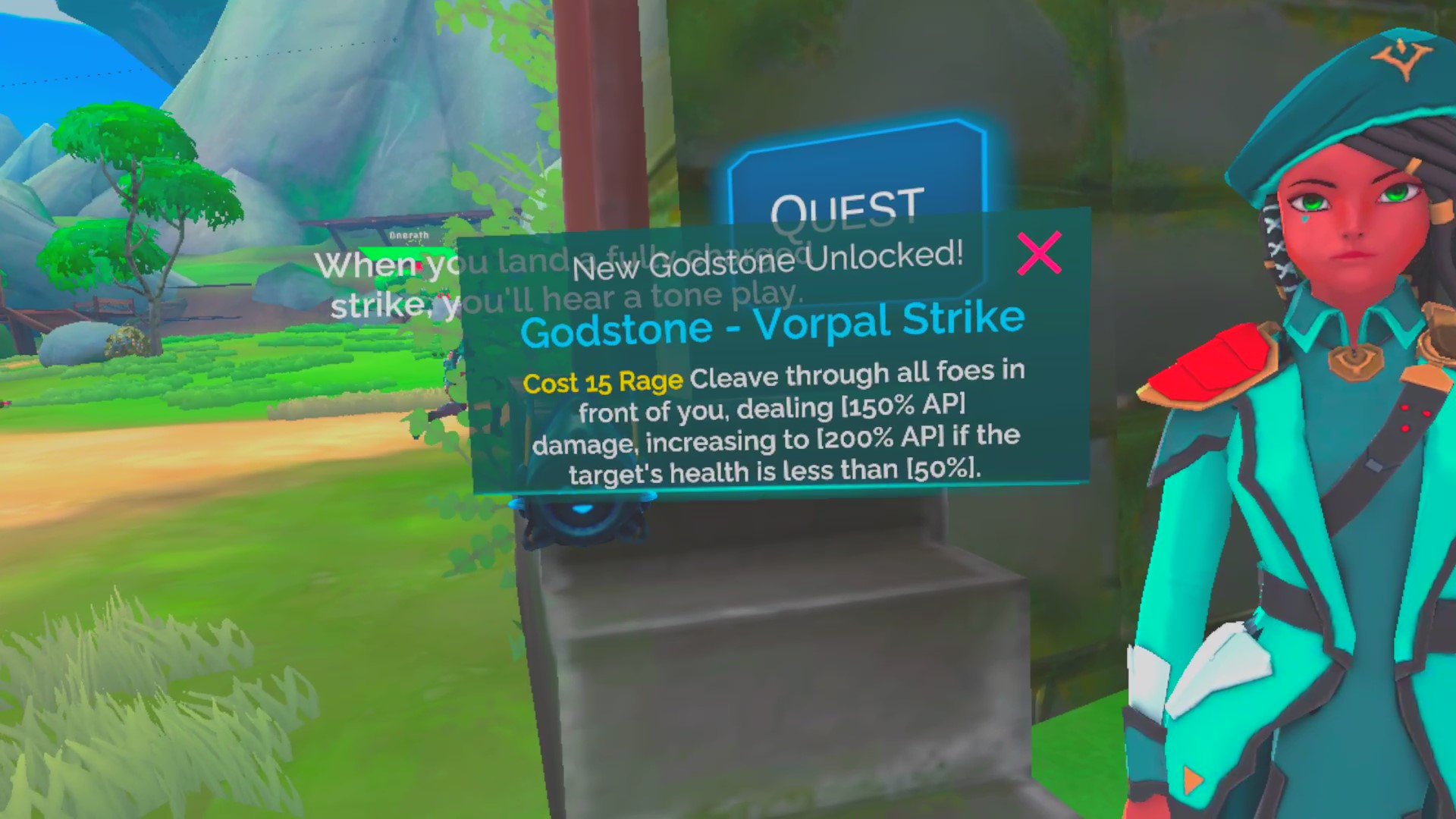
With that level comes a godstone. Godstones represent special abilities in Zenith. Activating one isn’t as simple as pressing a button for a Blade Master. Instead they need to be activated by striking in a certain way with normal or heavy attacks. For instance the Horizontal Cadence Godstones, like Vorpal Strike, are activated from hitting an enemy with three horizontal attacks in a row. It’s an interesting system that makes use of Virtual Reality’s interactivity and encourages striking consciously and precisely. This all adds an element of artistry to the combat and keeps it from devolving into random arm flailing. There aren’t many buttons to use on a VR controller anyhow.

I wander around for a while, smacking open chests, waving at passerby, and fighting enemies. I even find a couple of tear shaped crystals. I honestly thought they were scenery until I saw another player pick them up. A passing stranger told me that they can be used to upgrade your stamina for sprinting and flying.

Eventually I find a patch of farmland with a few very angry looking Sylphids and a bunch of Basil on the ground. Vegetation such as Oranges and Basil which can be used in cooking grow on the ground and in trees for anyone to collect. They’re all over the place. Like any good hoarder I grab as much as possible, even when it means running through a crowd of enemies. Fortunately a fellow Blade Master appears and fights through them with me.
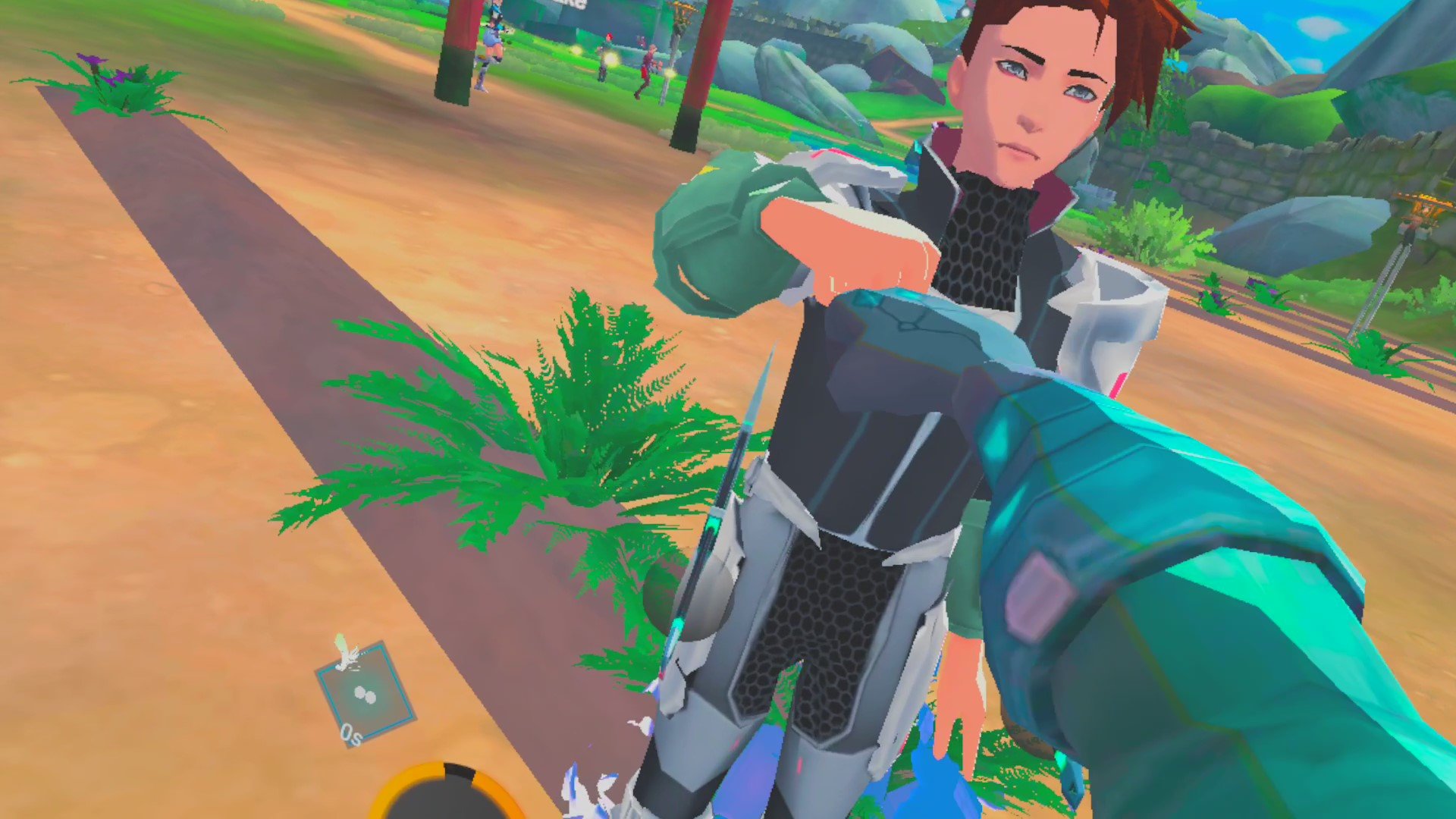
We talk for a little while. Mostly about the game and how everyone is the same height, even if they are clearly different ages. Some others come by and join us. Next thing we know there’s a whole group of us demolishing every enemy that spawns and chatting away. The true MMO experience. It’s so much different from any other MMORPG I’ve played. Normally chatting amicably while playing involves a Discord server or a LOT of typing. Hanging out with other players feels so much more… natural in VR. It’s like running into someone on the street. Once or twice I’ve been caught staring at somebody, and they’ll give an awkward wave back, as though I was staring at them for real. The social etiquette of video games and real life are starting to merge together.
Our group is decently sized, and we notice that we’re getting pretty good drops from the big red Sylphids we’re farming. A lot of gear and upgrade items. So we keep farming for a while, having a blast and talking about the drops we got, or anything else that comes to mind. Then a big block of text appears floating in the air. “Waiting for Event to Start”. Events are group activities that spawn a lot of enemies in a short period of time, requiring players to defeat them before a timer runs out for an increased reward of experience and in game money based on their level of participation. Also maybe an upgrade item or two. While there may be other types of events I’ve never found one. They all seem to be centered around killing hordes of enemies.
Regardless our group is pretty confident. There are quite a few of us and we’ve been constantly obtaining better equipment for the last fifteen or so minutes. We can take a few extra spawns. The count down finishes. Enemies start popping up and I start swinging. One goes down, another. Then my health bar starts to get low. More enemies are attacking me, and they’re tough. In seconds my health drops to zero and my screen goes gray. I look around and see the grey pillars of smoke that designate where a player has fallen littering the battlefield.
Any player can revive another in Zenith, unfortunately here there is noone left to revive us. So we all bring our hands together as though in prayer, and respawn.

Back at the end of the bridge leading out of the city our whole crew is there, and even more people. Someone is cooking, a feature that I haven’t tried yet, and I am force fed several cookies. Someone even shows me how cooking is done. I plan on doing some of that later.

We all chat a bunch. I point out the oranges spawning in a tree nearby and a whole horde of players jump up it trying to get their hands on those sweet fruits. Eventually someone comes up with the idea to raid a dungeon nearby. We’ve got about seven people, probably plenty. We all agree, but first someone wants to invite all of us to their guild. He goes around inviting people one by one, when my turn comes I see the invite on my screen but… mis-click the “Agree” button. I was pointing at the background to the alert when I pulled the trigger on my controller, and it disappeared. I’m not in a guild, and wow do I want to be in a guild with all of these nice people.
“No big deal,” I think. “Let’s just try that again.” My new friend invites me again, but nothing happens. No alert appears asking me to confirm. I check my menus, and I’m not in a guild. So I decide to try and get rid of the bug by logging out and logging back in. All of the others say they’ll wait for me. So I log out and try to log back in… to be confronted by the shard list.

Uhhhhh, which one was I on again? I don’t remember. I make a guess, hoping to find the right random word and number combination. Whatever shard I was on was not the one I guessed. My group is nowhere to be seen. I have no idea how to find them.
I hope they had fun in that dungeon. It’s frustrating to think that I missed out on such a spontaneous group experience because of a bug like that. I could have just kept going and ignored the guild, maybe I should have, but I didn’t think logging out and back in would force me to remember the shard name I picked earlier. Either way it ended as it did, and there will be other people to group up with another time.
I remember the carpet under my toes, the walls of the room around me, and the clock. Reality comes back in all at once. I need to be up early tomorrow. It’s late, time to get to sleep. I remove the headset and get ready for bed.
This story comes from my experience playing Zenith: The Last City on the Oculus Quest 2, or Meta Quest 2 as they’re calling it now. Zenith can be found on the Oculus Store for 29.99, and on Steam for the same (unless it’s on sale). It’s a really fun game, and also a good social space as well. As of writing it’s actually Steam’s top selling game period, not just in VR, but all categories.

The Thrill Of The Fight - Beginner Guide and Knockout Tips
So you’ve got your VR headset, probably an Oculus Quest 2, and you’ve bought and installed The Thrill Of The Fight. Maybe you want to get in shape for the new year with VR’s most intense workout, maybe you just think boxing in Virtual Reality sounds like fun, or maybe you’re a connoisseur that just loves to absorb new VR experiences.
Whatever the case is you might be confused after your first match or two. You may wonder, what are the little puffs of smoke every time I hit my opponent? Why does he never get knocked out? Why did I lose, or why did I win? Well don’t worry because you’re in the right place now. Welcome to the definitive Thrill Of The Fight beginner’s guide.

So you’ve got your VR headset, probably an Oculus Quest 2, and you’ve bought and installed The Thrill Of The Fight. Maybe you want to get in shape for the new year with VR’s most intense workout, maybe you just think boxing in Virtual Reality sounds like fun, or maybe you’re a connoisseur that just loves to absorb new VR experiences.
Whatever the case is you might be confused after your first match or two. You may wonder, what are the little puffs of smoke every time I hit my opponent? Why does he never get knocked out? Why did I lose, or why did I win? Well don’t worry because you’re in the right place now. Welcome to the definitive Thrill Of The Fight beginner’s guide.
How To KO
After a match or two you might be wondering. How hard do I have to hit this guy to knock him down? While you can certainly score victories on points, if you want to win by knockout you’ll need to have a better idea of what you’re doing. More importantly, you will need a better idea of where you are hitting.
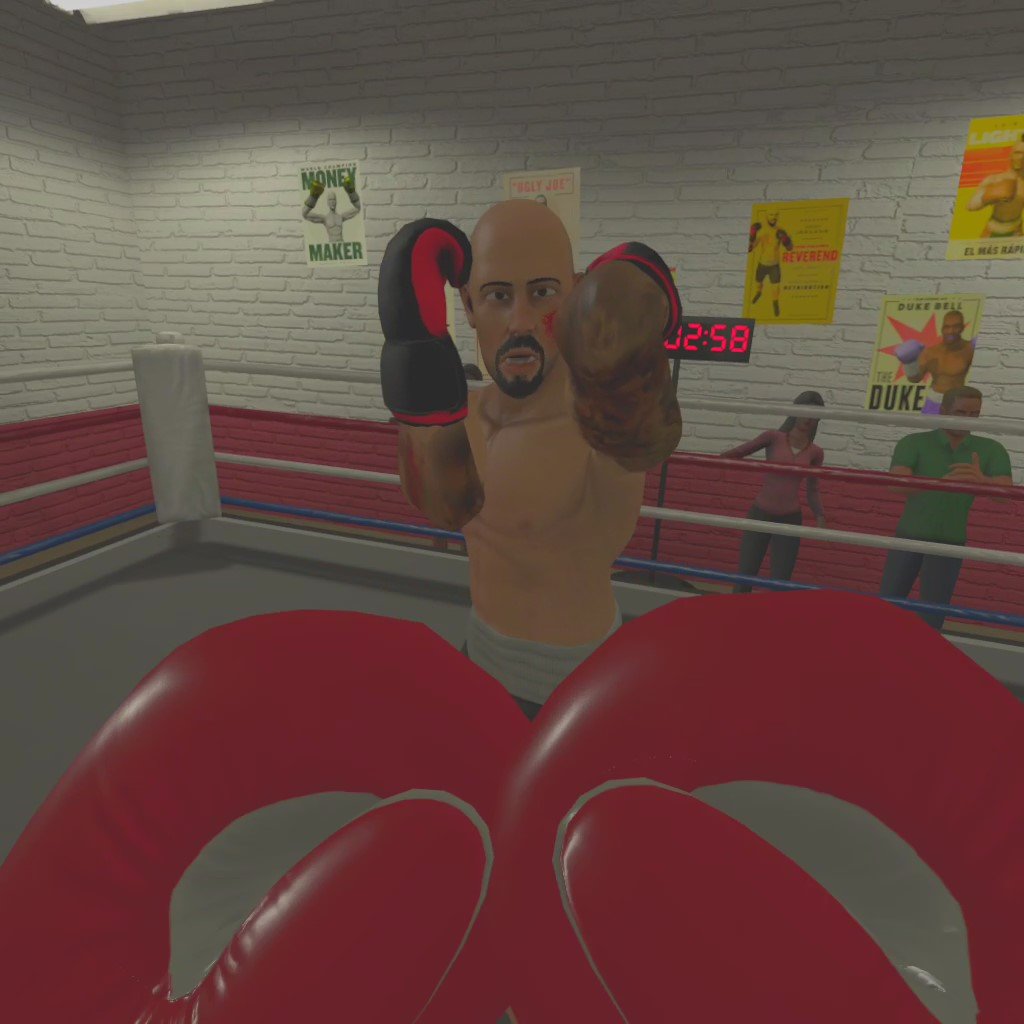
Striking precisely is a key component of Thrill Of The Fight. A Mike Tyson level punch square in the face still won’t do a lot of damage. What you need to do is hit the weak points. “But how,” you ask. “Am I supposed to know where the weak points are? The game never told me!”
What you need to do is go to the Training Dummy from the main menu. When you look at the dummy you’ll see some dots on his chin and head, even one on the side of his body. Those are the weak points. Practice on the dummy a little and get good at striking those points hard. If you want to get some knockouts quickly, then get really good at throwing one sort of punch to the head. Hooks are great because you can strike from two different sides, and there is a lot of room on your opponent’s jawline.

Now hit the same point on an opponent. Your strikes that before gave off a little grey puff of smoke? Now they’re making yellow, orange, and maybe even red if you swing hard enough.
If you’re having trouble knocking them down in the first round, don’t worry, just keep hitting them hard and precisely. Your opponent has an invisible “health pool” of sorts. The more damage dealt to them, the easier they are to knock down. If you keep chipping away at them they’ll be easier and easier to take down.

If you want to see how to knockout Ugly Joe in real time check out the video of it here. A few solid hits to the jaw in quick succession and you can KO any fighter on Outclassed difficulty.
How To Win
So now you can deal some damage, great! So how do you win? It’s simple really. You can either KO the other fighter more than he KOs you, or just hit him more than he hits you, or you can KO him three times in a single round. That’s called a technical knockout. In The Thrill Of The Fight you can almost never knock out your opponent for a full 10 count. While knocking an opponent out for a ten count is technically possible, landing a hit so devastating that you get a KO victory is extremely difficult and you will rarely, if ever, see it.
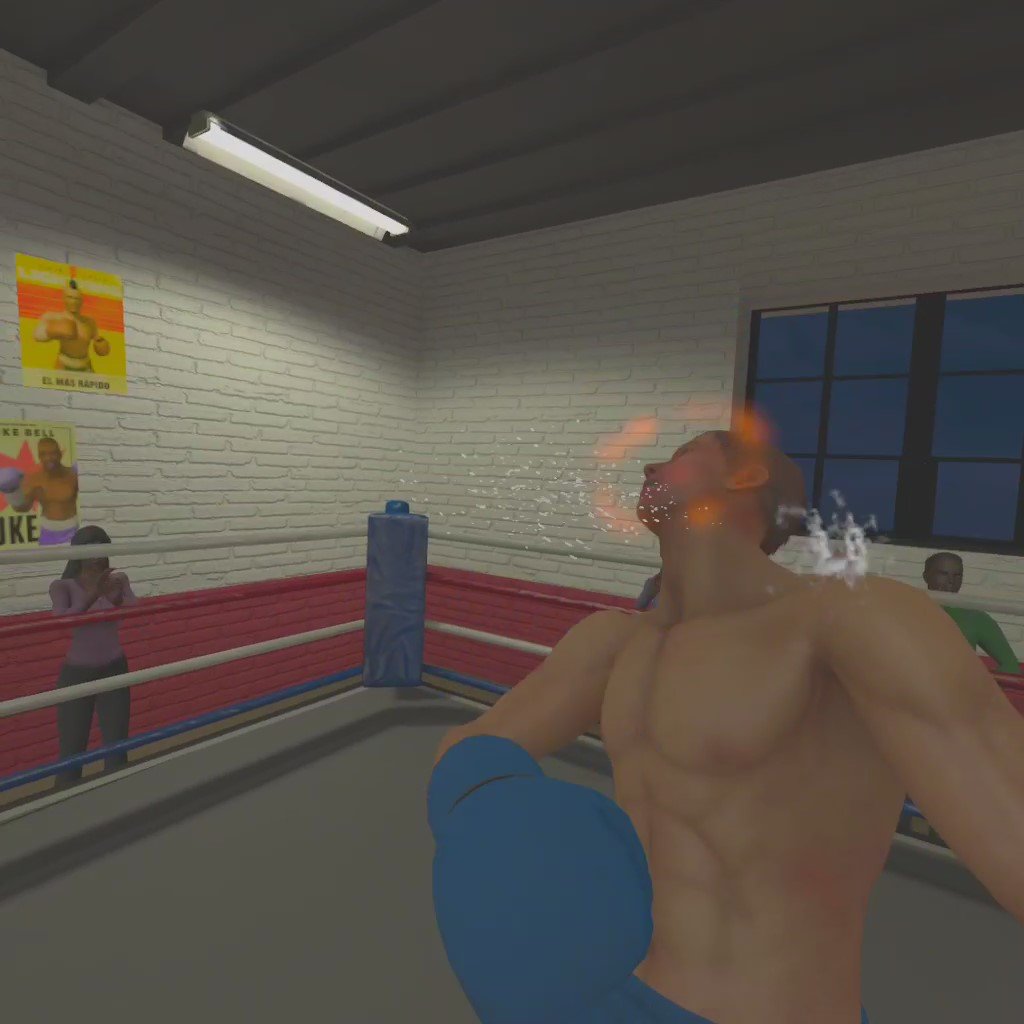
Even though the ref counts every time, it will typically be to eight. That kind of ruins the suspense of the count, but it will never be more or less than 8 counts. To win a match early, just do that three times in one round. It can be really hard on some opponents. Especially when you’ve got two knockouts with only thirty or so seconds left.
In those cases especially you might have a tough time getting past the other fighter’s guard. When they aren’t actively attacking you, it can be very hard to get through. Say, for instance, that you’re not very good at uppercuts, but you throw some mean hooks. Well, what if your opponent blocks the sides of their head? You can’t punch through their block, so do you just have to wait for them to attack? No you don’t.
The AI is pretty straightforward. They will block in the last place that you hit them with sufficient strength. If they block the sides of their head then throw some straights to their face. They might not do a lot of damage, but their guard will move to protect their face, leaving the sides of their head and jaw wide open. Hits to the body can work even better, forcing your opponent to drop their guard to their abdomen.
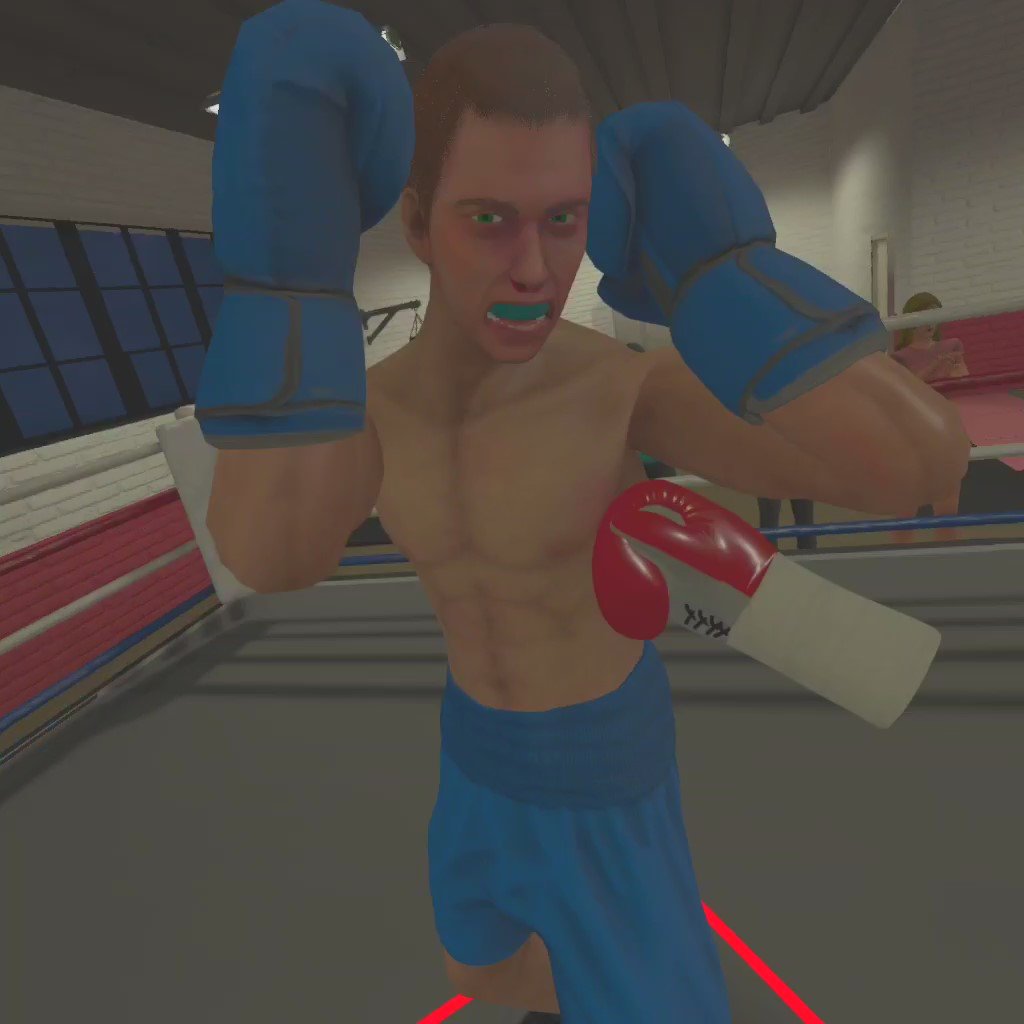
Of course, you cannot always win with a good offense alone. Defense is just as crucial. Make sure to watch your opponent closely for attacks, and stay mobile and light on your feet. With a little practice dodging an incoming punch is easier than you think. Moving your head out of the way may buy you a crucial moment needed to bring your hands up to ward off the incoming blow.
Most importantly, even when attacking, keep your hands up. Always keep them up. Blocking is easy in Thrill Of The Fight, your gloves have a generous hitbox and they just need to be vaguely in the way of an incoming blow to completely nullify it. Don’t take hits without cause by not keeping a free hand up. Throwing a punch with your right? Keep your left in front of your head. When you progress to the Endurance or Outclassed difficulties a single punch from an opponent is capable of knocking you out for a 10 count.
How To Progress
Progression is pretty straightforward in Thrill Of The Fight. You unlock each fighter by defeating the previous fighter. There are ten in total. We have a whole list on who they are and how to beat them here. While each fighter has a different fighting style, they generally get harder the further along you get. We even have an article on the Extra Halloween Fighters. Additionally there are difficulty modes ranging from the ridiculously easy to extremely hard.
Normal is the highest difficulty unlocked by default. Beating a fighter on Normal allows you to fight them on Endurance difficulty, and defeating them on Endurance unlocks Outclassed. There are also some special fighters that are unlike anything else in the “Extras” button of the main menu.
Settings
Thrill Of The Fight is pretty customizable, which is a great strength of the game. Check out the settings menu, and if anything feels a little off while fighting, chances are you’ll find a solution here. There are a few options, but the most important are Glove Size, Drift Protection, and most of all Punch Force Adjustment.
When it comes to glove size it is easiest to have the glove size match the general size of your actual hands, with most fitting in the “Medium” category. However changing your glove size to fit your playstyle can also be beneficial, or an interesting way to shake the game up. It is much easier to block incoming punches with big gloves, but it’s harder to get past your opponent’s guard. Big hands means a bigger hitbox to make contact with your opponent’s hands. On the other hand smaller gloves are much easier to sneak in past another fighter’s guard, but not large enough to provide for easy defense.
Drift Protection is a matter of preference as well. While it is off by default, turning it on will make fast punches drift less, and keep your movements in VR much tighter. This is especially true for hooks or uppercuts. The distance to your opponent will be closer by necessity, as you won’t be able to throw punches as far, but those punches will feel much more realistic.
Lastly is Punch Force Adjustment. Automatic Force Adjustment is on by default. What that does is automatically change the force multiplier of your blows. If the multiplier is high, then a blow that is physically weak will deal a lot of damage in the game. If the multiplier is low, then a blow that is physically weak will not deal any damage. With Automatic Force Adjustment on then the game will change the multiplier according to the hardest punches that you throw. Throw very hard punches, and the multiplier goes down. Throw very weak punches, and it goes up. This system encourages throwing consistently weak blows, with an occasional knockout swing.

If that style of boxing does not appeal to you, or you would rather not have the force of your blows be arbitrarily decided for you, turn Automatic Force Adjustment off. Without it you may feel that your hits deal damage more consistently according to how much effort you put into them, and how accurate they are on weak points. Make sure to also adjust the multipliers manually to a setting you feel comfortable with.
Remember that all of your opponents will fight differently. Hitting sufficiently hard is just the first step to victory. There’s some strategy as well. For some more information on opponents at the strategies that will help to defeat them check out our opponent breakdown guide.
Having trouble sweating through your headset’s face cover? Try out new ones from VR Cover that repel sweat and are easy to swap in.
Well that’s all for The Thrill Of The Fight that should be enough to get you started, and remove a little mystery around how the game actually works. You’ll be knocking out Moneymaker on Outclassed difficulty in no time. The Thrill Of the Fight by Sealost Interactive is available for $9.99 on the Oculus Store. It is also available for $9.99 on Steam. Thanks for reading, and happy boxing.
The Best Oculus Quest 2 Games to start 2022
Maybe you got an Oculus Quest 2 (or rather Meta Quest 2) for Christmas. Maybe you’ve had one in a while and want to dust it off and get into some new experiences in Virtual Reality. Either way we’ve got you covered with a list of the best VR games to buy here at the start of 2022.
Maybe you got an Oculus Quest 2 (or rather Meta Quest 2) for Christmas. Maybe you’ve had one in a while and want to dust it off and get into some new experiences in Virtual Reality. Either way we’ve got you covered with a list of the best VR games to buy here at the start of 2022.
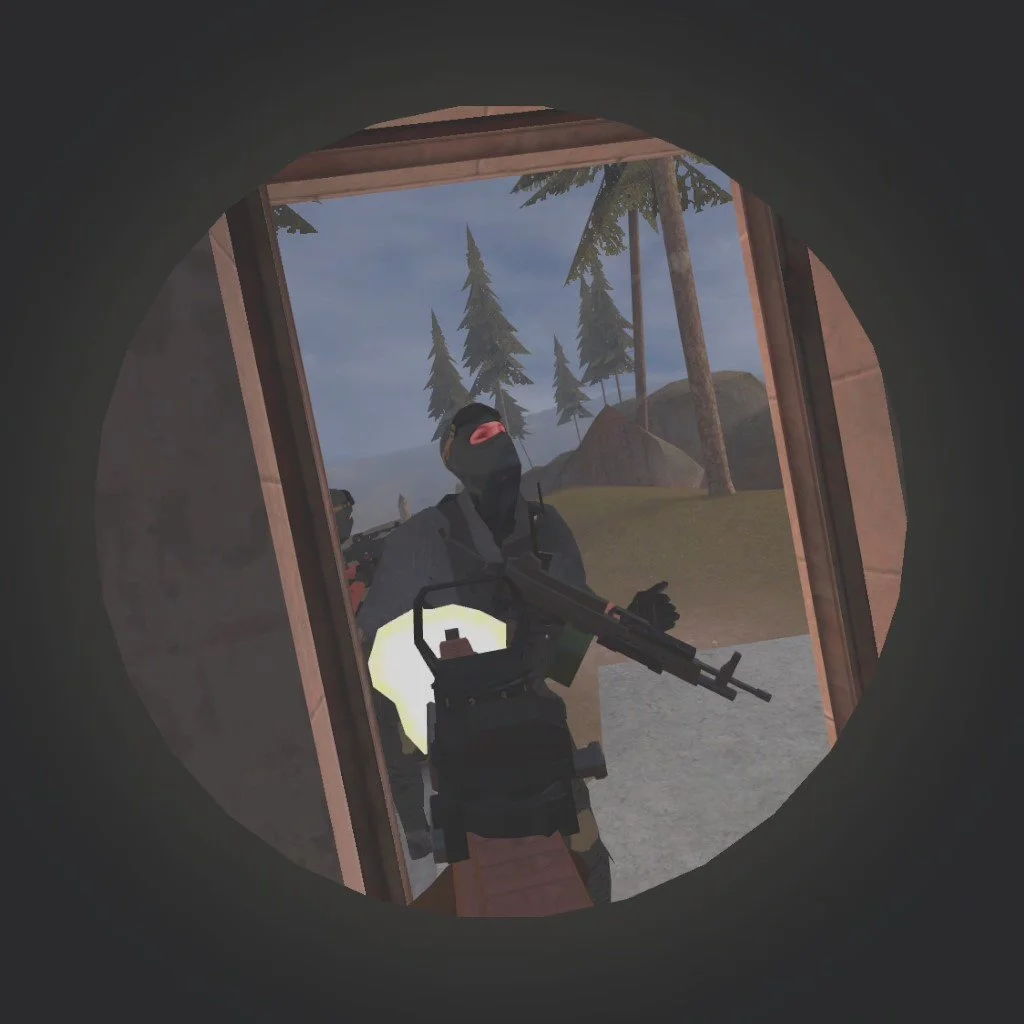
Onward
Do you like Counter Strike: Global Offensive? Maybe you like Squad or Arma 3 any other variety of milsim shooters that are out there right now. Well if you like shooters and you like your gameplay to be slow and low then look no further. Onward has a very low time to kill as well as slow player movement. All of this encourages a slow pace and well thought out tactics. There are a variety of different weapons and a couple of game modes for 5v5 matches. It is primarily a multiplayer game, though there is a singleplayer component.
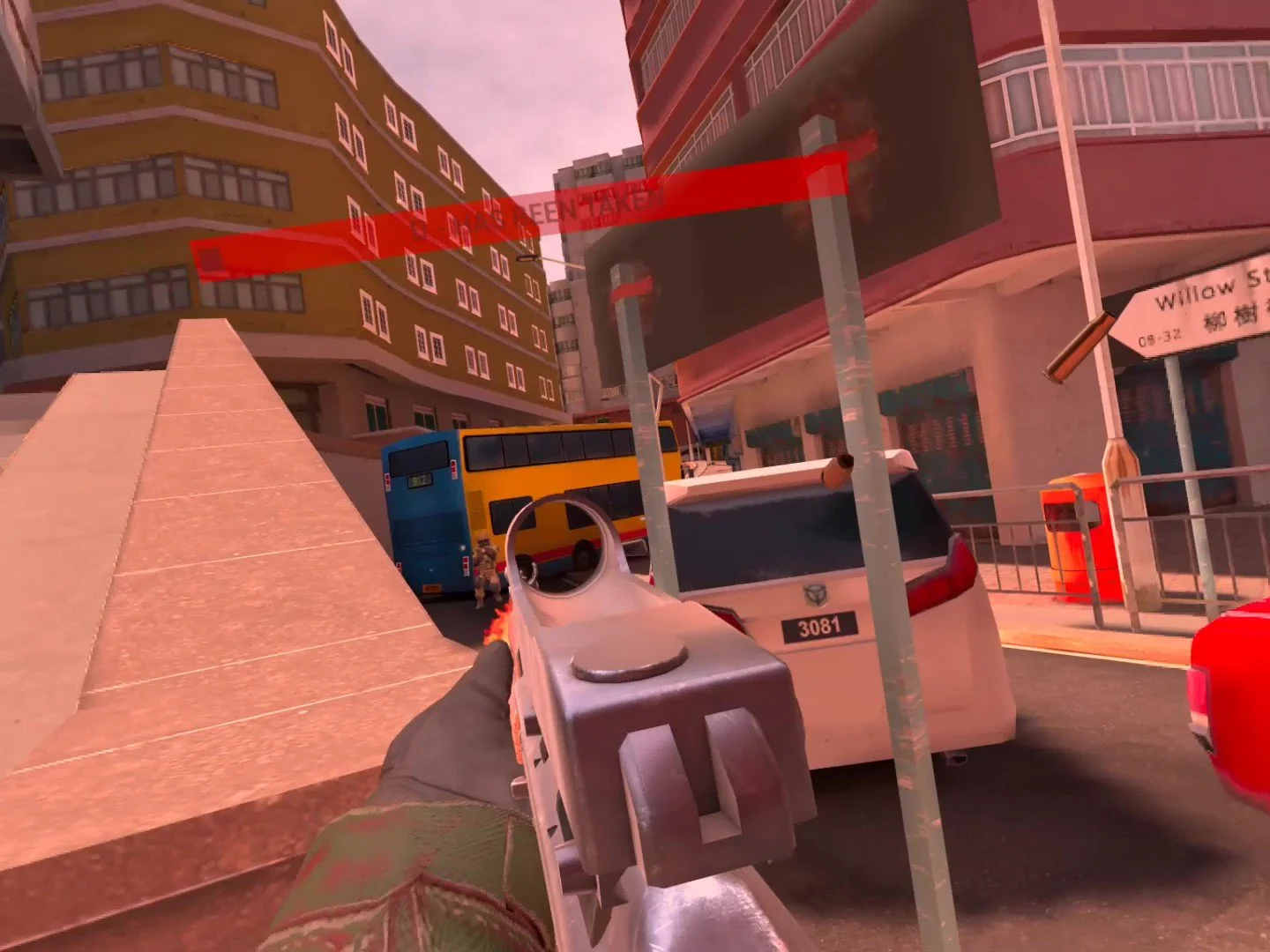
Contractors
Where Onward is the slow paced shooter, Contractors is for those who like their modern military shooter to be a little more fast paced. Think of Contractors as Call Of Duty VR. A recent update added combat sliding the game to even further reinforce fast and frenetic gameplay. There is a longer time to kill than Onward and each player moves much faster, encouraging using movement and quick sprays of bullets to overcome opponents. Match sizes vary from 5v5 to 8v8 or even five player modes versus AI like the Survival game mode.
Blade and Sorcery: Nomad
Blade and Sorcery has finally come to the Quest 2. What is there to say that has not already been said? If you want to bash opponents with medieval weapons then this is the game for you. Especially if you want to do so in slow motion, while jumping over their heads. Oh, and that’s not to mention the magic at your fingertips. Currently Blade and Sorcery: Nomad is a little lacking in content. A limited “Dungeons” mode does offer some semblance of progression oriented gameplay, mostly it’s just a sandbox, for now.

Gorn
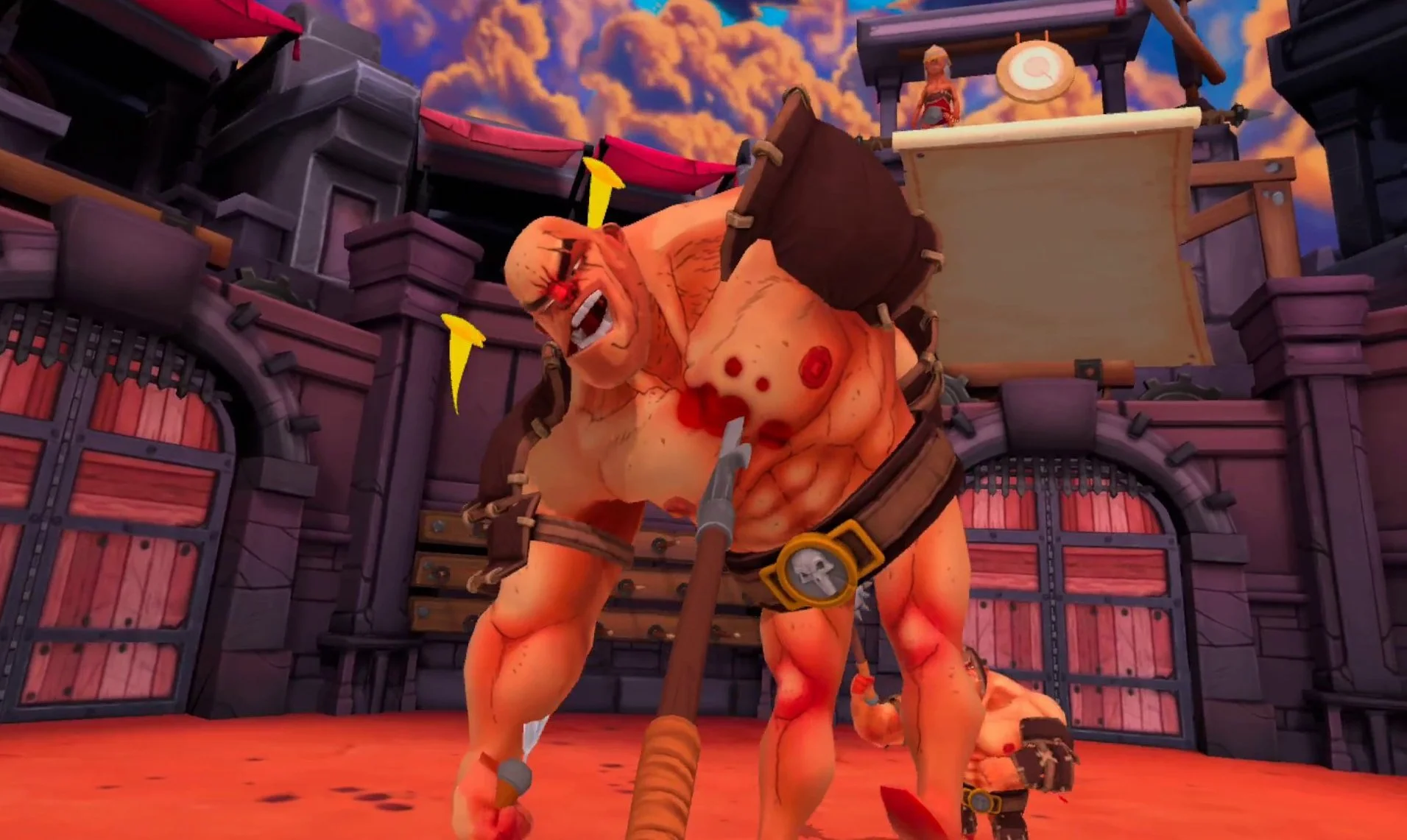
Say you like bashing enemies with medieval weapons, but you also like a bit of comedy on the side? Well say no more because Gorn has you covered. Each opponent has comically large arms and chests to accompany smaller legs and heads. In Gorn you can bash or slice your way through a variety of levels using different weapons, each culminating in a different boss fight. All to eventually defeat the warlord who keeps you there and be free of the Arena. Though even then there is an endless fight mode to enjoy and see how many enemies you can kill before falling yourself.
Eternal Starlight
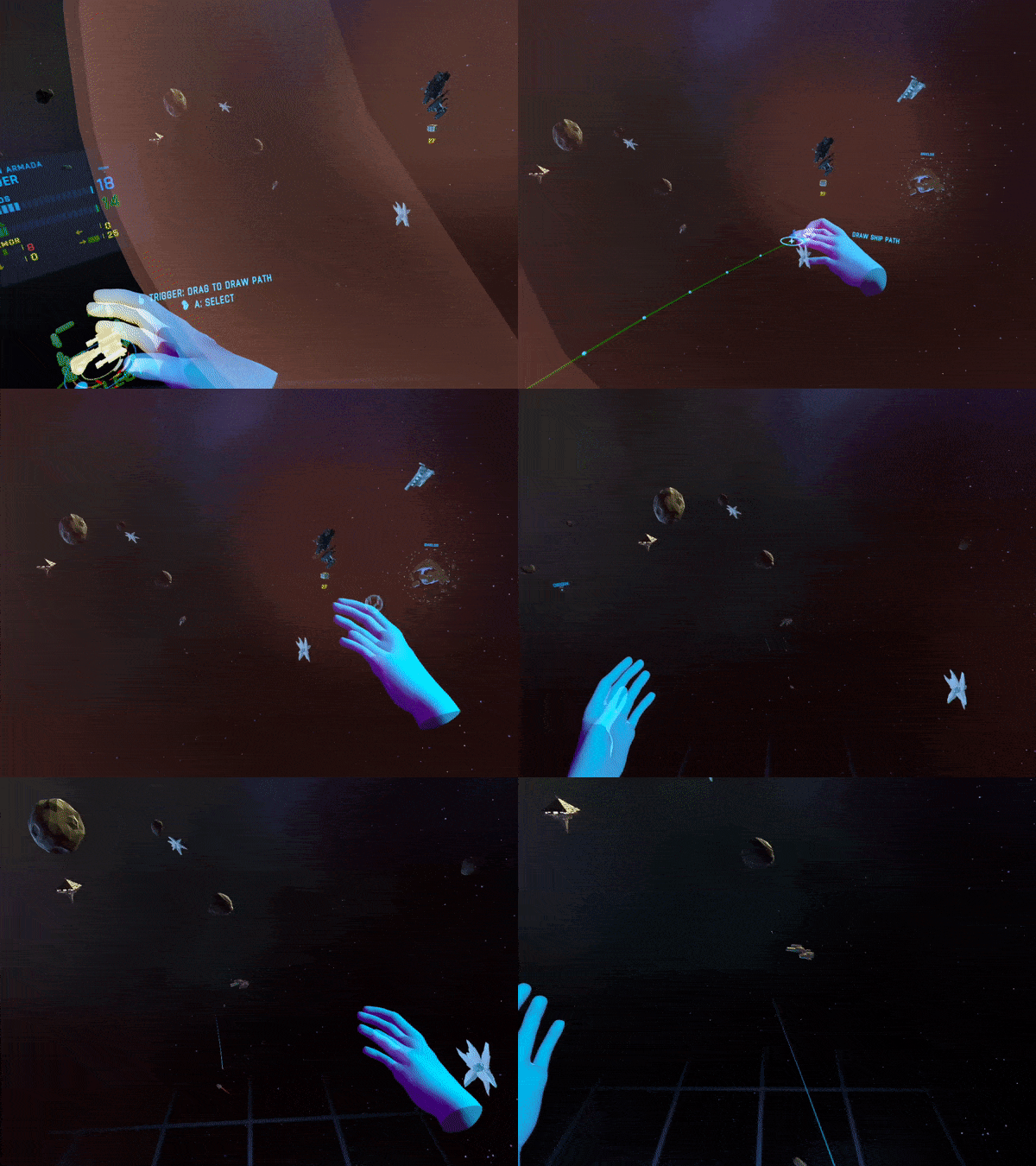
This one won’t be for everyone except for those few who really like both strategy games and VR. As we’ve covered here Eternal Starlight is really the only RTS option on the Oculus Quest 2/Meta Quest 2 at the moment. Its roguelike aspects are an odd design choice and the gameplay doesn’t do anything different or better than other RTS games. The look into a few of the things VR could add, such as a spectacular view of the battle, could be interesting to those who are already fond of the genre.
Medal Of Honor: Above and Beyond
Do you like World War 2? Do you like shooters? Well here you go. World War 2 shooters were a big craze back in the day, and we still see a decent number of them coming out for the PC. However there are slim pickings for WW2 shooters on the Quest 2. The best for sure is Medal of Honor: Above and Beyond. Now you can take part in many of the most exciting scenes of World War 2 in VR, and use many of the weapons as well. Drive a tank, bomb a factory, and so much more. There’s even the assault of Omaha Beach, a classic set-piece for WW2 shooters. Not to mention the multiplayer, which supports up to 8 people in a lobby, and is pretty fun.

Beat Saber
Beat Saber is a game you either love or feel nothing for. It is Guitar Hero for the Oculus Quest 2/Meta Quest 2. Try the demo just to see if you like it. As far as VR games go Beat Saber is the most enduring popular. It would be insane not to include it in any list of the best Virtual Reality games on any platform. It’s all about chopping blocks to the rhythm of music, but there’s something about it that keeps people coming back over and over again.

Thrill of the Fight
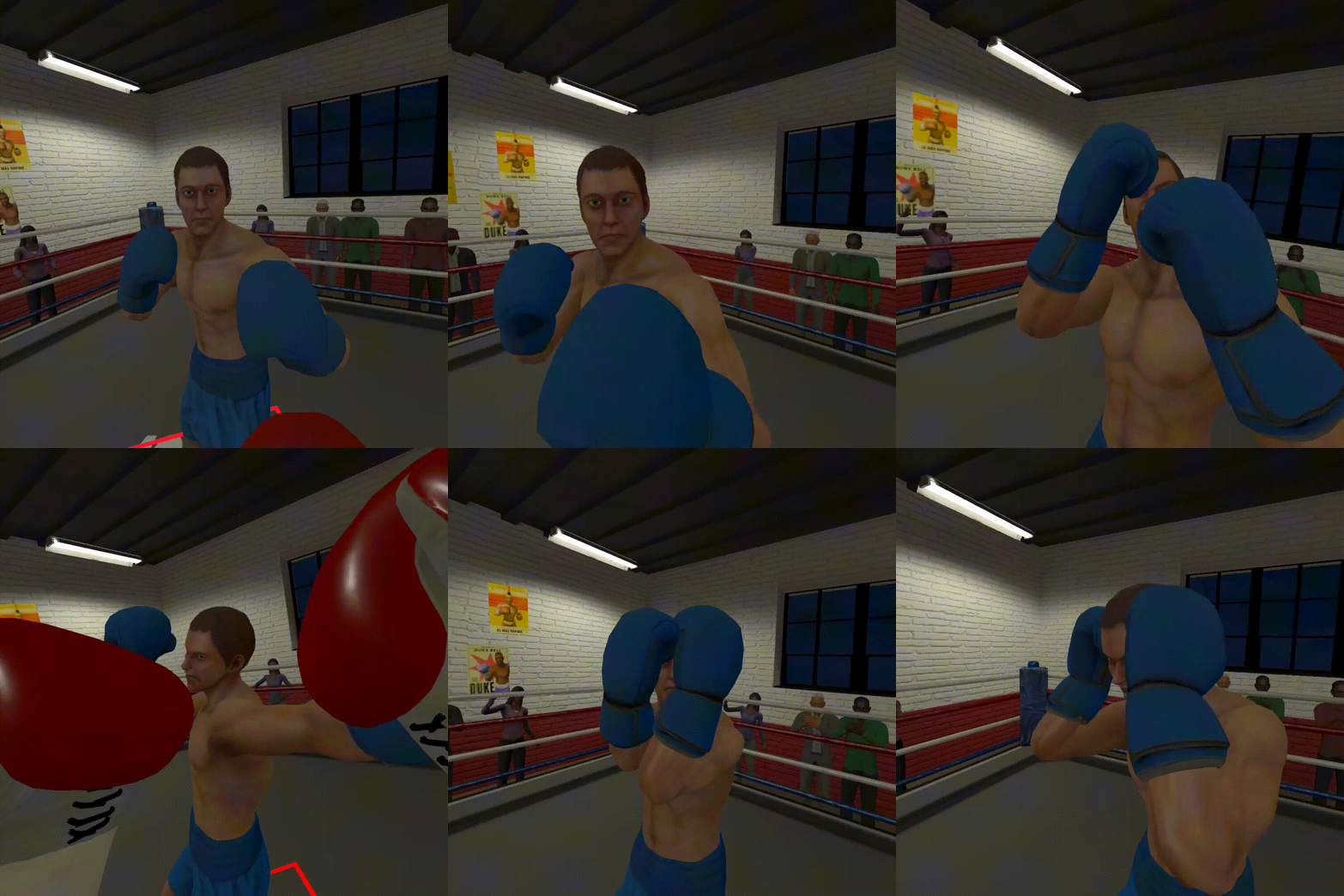
Like boxing? Or maybe just the idea of boxing without all of the head trauma? Look no further. As far as boxing simulators go Thrill of the Fight has no equal. Except for maybe Thrill of the Fight 2… whenever that comes out. In Thrill of the Fight go toe to toe with a number of opponents each utilizing different strategies, strengths, and weaknesses to try and knock you out first. Master the art of throwing the perfect hook to another person’s jawline. Or, if the idea of VR fitness intrigues you, fight round after round until you’re too tired to continue. Thrill of the Fight is VR’s most intense workout. Since it’s on the Quest, there are no wires to get in your way either.
Pistol Whip
So maybe you might like a rhythm game, but don’t like Beat Saber. Well Pistol Whip could be what you’re looking for. It is a game also set to a beat, but instead of slicing advancing blocks, you shoot your way through waves of enemies. Pistol Whip has received several major updates and content additions since its release, which has included new weapons like the revolver and shotgun. Not to mention new maps and even a couple of story driven campaigns. Turn up the difficulty high enough and it can be a workout too as you try to dodge incoming bullets and fire back simultaneously.

The Walking Dead: Saints and Sinners
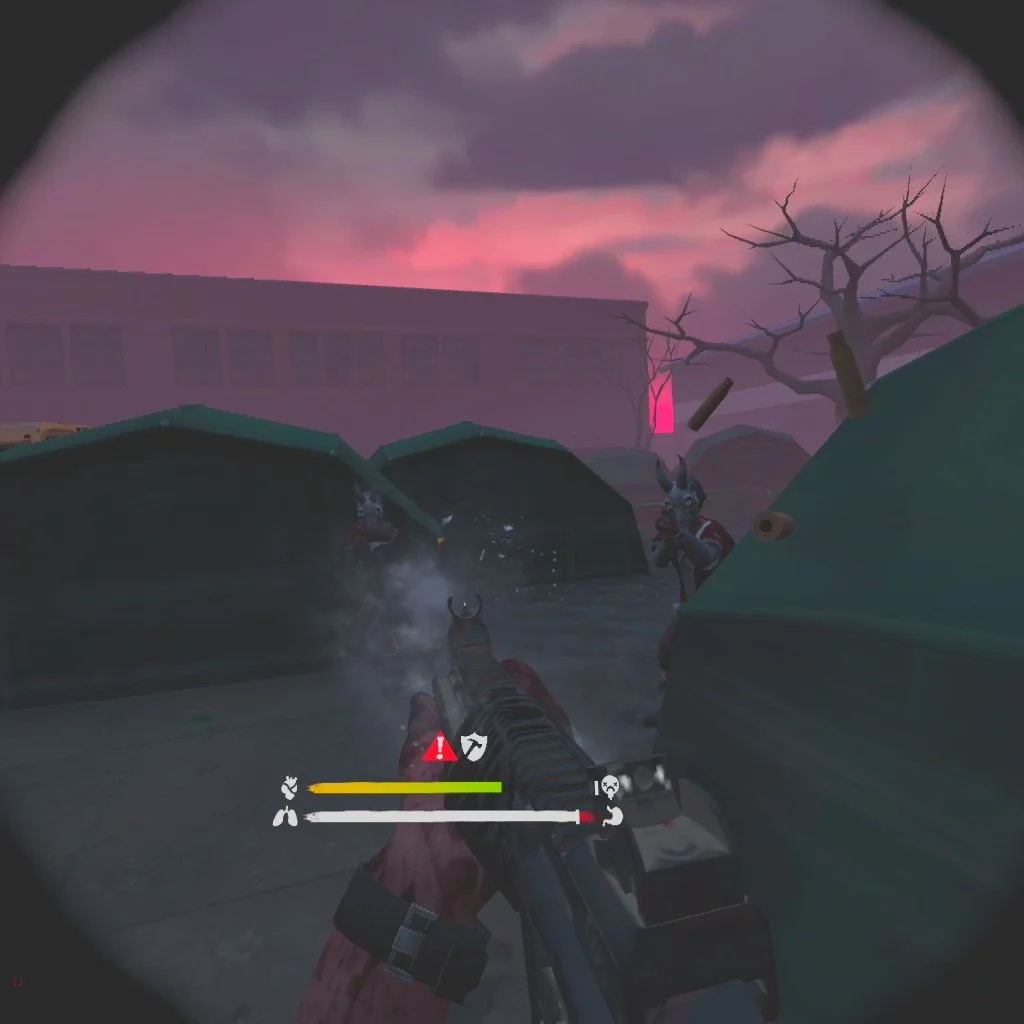
No list of the best VR games can be completed with The Walking Dead: Saints and Sinners. As far as VR games go this is the one that most takes advantage of the fact that it is in VR. Fight or sneak by humans and zombies alike as you try to find “The Reserve” a National Guard bunker somewhere in the flooded ruins of New Orleans. Scavenge for resources to craft what you will need to survive. Witness and take part in the conflict between the Tower and the Reclaimed. If you like zombies this is a must have game, and even if you don’t there are few if any other titles on the Meta Quest/Oculus Quest 2 that feel as immersive.
Blaston
Blaston is a very unique idea for a VR game. Two players, each standing a short distance away from each other, blast away with various slow moving weapons in order to deplete their opponents health pool before their own. It sounds like a simple premise, but there is a surprising amount of strategy and depth to it. With very quick match times to other players it is a game that’s easy to jump into for a few quick matches, or binge for hours until your battery dies or your legs give out. Contorting and jumping to avoid enemy fire is fun and very active.

Resident Evil 4 VR
We’ve saved the best for last, best port of a PC game at least. Resident Evil 4 VR is everything you would want for a PC game port to VR. Solid controls, little to no bugs, same gameplay feel and experience. All expanded by being in Virtual Reality. It’s easier to line up shots on los Ganados when using your actual hands to aim. All of the spooky creatures and settings are much more enjoyable when they capture your entire vision. Resident Evil 4 is a classic that invented a whole new genre. Resident Evil 4 VR is an expert reimagining of it in Virtual Reality. There is a ton of content here for a VR game, and wow does it keep you coming back.

That’s all for us. While other games were in consideration for this list, only the very best in their class or the most unique made it to the final cut. Though maybe there’s something we haven’t heard about. Do you know of a game that should be on this list? Leave a comment.

Can RTS Work in VR? - Eternal Starlight Review
Eternal Starlight attempts to fill a very strange niche, in fact a couple of strange niches. It is an RTS, or Real Time Strategy Game, and at the same time is a roguelike. Both genres, while having long histories on traditional gaming platforms, are rare in Virtual Reality. What examples do exist are also mostly on PCVR. For those that desire an option on the Oculus Quest there is really only Eternal Starlight and Skyworld: Kingdom Brawl. The latter is more of a Clash Royale in VR than a strategy game. So that leaves just Eternal Starlight for the Quest 2.

Eternal Starlight attempts to fill a very strange niche, in fact a couple of strange niches. It is an RTS, or Real Time Strategy Game, and at the same time is a roguelike. Both genres, while having long histories on traditional gaming platforms, are rare in Virtual Reality. What examples do exist are also mostly on PCVR. For those that desire an option on the Oculus Quest there is really only Eternal Starlight and Skyworld: Kingdom Brawl. The latter is more of a Clash Royale in VR than a strategy game. So that leaves just Eternal Starlight for the Quest 2.
A video version of this article can be found here on Youtube.
Homeworld in VR?
Eternal Starlight is sort of a Homeworld in Virtual Reality. For those who don’t know, Homeworld was an RTS game published in the late 90s that became a big hit, and remains a cult classic for aficionados of the genre. The big draw of Homeworld was its full use of three dimensions in its tactical combat, which was very fitting as it took place entirely in outer space. Coupled with a compelling space opera story, it had the potential to redefine the genre. Unfortunately, it did not.
That is what makes Eternal Starlight so interesting. It takes some of the same concepts that made Homeworld great and utilizes them in Virtual Reality. Each dimension of space is fully utilized. Ships can move upwards, downwards, and side to side in order to gain a better firing angle or positional advantage on an opponent. Just as in Homeworld there are ample asteroids and space debris to utilize in order to hide or block firing angles. The environment is, at least in theory, as much a part of the battle as the ships in the arena.
Let’s back up for a second, to truly recognize this comparison, and to determine if this use of three dimensional space in a VR RTS makes for viable and interesting gameplay, we need to know a little more about Eternal Starlight.
Eternal Starlight - An Overview
As mentioned before Eternal Starlight is a VR RTS Roguelike. That is a rare thing in VR, a platform that lends itself to first person experiences. VR is the ultimate form of first person. The player’s arms are virtual arms, their virtual body is their actual body. No other medium allows for interaction that is so close to real life. However, an RTS is so impersonal, so divorced from the sort of physical interaction that makes Virtual Reality immersive. Still, Virtual Reality certainly brings some upsides.
In Eternal Starlight you get a beter view of the battlefield than in any other RTS game. RTS camera controls are pretty standard, the camera can be panned, it can be zoomed, but it always a 2D display of 3D objects. In VR you can look around as though you are a giant head on the battlefield, craning your neck easily to capture any angle you desire. Rather than move a mouse you grab space and move yourself around with your hand. It feels kind of like climbing a ladder. Two hands are moved towards or away from each other to zoom in or out. Sort of like would be done on a Phone or Tablet.

These are map controls that are the same as they are on a computer screen, but the movement of the map is so much more intense. It feels as though you are there, floating through space. It is a simple translation of old RTS camera movement to a new medium.
It works and it adds that new dimension of up-close intensity and immersive spectacle that VR always does, but it doesn’t add much. It’s cool, and it is a novelty. Craning your neck around to see a laser beam slice into an enemy ship is great, but it doesn’t add anything to the actual gameplay experience other than a nicer view. Nothing here utilizes VR specifically to affect the gameplay, just how that gameplay is observed. It is merely a fun way to reuse an old system with a new view and new control inputs.
The rest of the game is inconsequential to VR. New ships can be rewarded through missions or bought for a high price. There is a great modular equipment and upgrade system that allows the player to increase the strength of each individual ship and specialize its role with weapons systems, special ability items, and upgrade modules.

Roguelike For No Reason
That brings up the roguelike aspect of the game. This game seems as though it was designed to be a linear experience with permadeath added afterward to encourage replayability. If the player’s flagship is destroyed then game over, start again from scratch. There is some light progression, completing missions gives a slightly more upgraded flagship on following runs, or options for different types of starting flagships. They do make subsequent runs easier, but what makes this game a bad roguelike is how punishing it can be of small mistakes.
Barely winning a battle with the final enemy ship can still lead to a game over when that ship explodes and destroys the player’s flagship. A really good run can have a single mission which goes badly and cannot be replayed. Maybe a couple of units were in the wrong place, and then were destroyed. Maybe that unit was fully upgraded and cost many thousands of resources, locking the player out of harder missions for possibly the rest of the game as they struggle to catch back up.

Resources can be hard to acquire, because if a ship is damaged resources must be spent to repair it, a sizeable amount of them. A balance can be achieved where the player accumulates more resources than they consume, but it is a hard balance to strike. As a new player it can be easy to feel as though there is no progression and every mission is a net loss. Even with the ability to pause the game at will and issue commands it can be overwhelming. New players should start on “Easy” mode if they want to make any meaningful progress.
Eternal Starlight is not helped by how difficult it is to control units. The VR interactions again are not new, but novel in their Virtual form. Trigger selects units, or can be used to drag them to a specific location. The problem is that they don’t seem to listen. Even telling a unit to attack an enemy can be unhelpful. For instance a ship designed to use long range artillery might very well decide to close with the enemy ship to use its short range weapons rather than bombard it from afar as intended. Turning off the AI can help this, but it does not help how unresponsive they are. Just trying to tell a unit to turn, for the love of god TURN, so that the enemy is in the firing arc of its weapons is extremely frustrating. Only using special weapons such as a Fusion Beam makes the ships move into firing position with any kind of alacrity. For a game so reliant on use of terrain and precise maneuvering to outfox the enemy this is a serious handicap. Starting from the beginning once more because units did not respond to orders as they should is not a good feeling.
Even without the VR aspect, combining a roguelike and an RTS is an uncommon combination, and should have been handled with more care. Possibly the ability to redo missions, at least for a limited number of times, might have made this game feel less unfair. As it stands the roguelike aspect of the game does not mesh well with the Strategy aspect of the game. It feels punishing to try new and interesting ship combinations, because if they don’t work then the player has to start all over again. While there is a skirmish mode for experimentation, the overall effect of the roguelike aspect of the game is frustrating. This is especially true for those who don’t want to sink many hours in a single game completion. It does get easier over time as the player learns how to make powerful ships that can simply tank and dish out a lot of damage, but this takes so long that it might drive many players away early on.
Most missions are always the same, though different ones appear each playthrough. Not every mission can be completed in one successful run, but most can. This, unfortunately, leaves out some important story elements when the final battle comes around. Speaking of the story, it’s alright. The aliens are all silly with one dimensional personalities like those in Star Control, which makes them suitably entertaining for a little while. There are some plotlines that feel important to resolve the first time, but not the third or fourth. The big enemy that is the focus of the game has some enigmatic master controlling their aggression. Enough story to tie the battles together in an interesting way, but not enough to be a draw on its own.

But What About RTSes In VR?
So Eternal Starlight has some problems, but what does this mean for the efficacy of VR as a medium for RTS or Strategy gaming in general? Eternal Starlight does show that utilizing 3D space ala Homeworld is one of the best and most impressive ways to utilize VR. For all the sameness of the control schemes it is much easier to direct ships to move up and down rather than simply side to side. That ability is directly due to this experience being in Virtual Reality. Zooming out far to see the battlefield is also much easier in Virtual Reality than in any other medium, though occasionally finding smaller ships like fighters against the backdrop of space can be difficult.
Those are mostly intrinsic qualities of the medium, and Eternal Starlight does little else with the fact that it is in VR. It would be about as good of a game if it was on a traditional flat screen. So if anyone out there is looking for proof that VR is a better medium for strategy, then you may have to wait for longer. Though all of this begs the question, what would make for a better RTS in VR?
Assuming that Eternal Starlight’s more mundane flaws could be fixed. The finicky movement, AI controlled ships being very unreliable, and the many problems with its roguelike format, what else could be done? Maybe if special abilities had to be flung towards their target like a hand grenade, or some other form of control that was more conducive to hand movements. Adding a “skillshot” element to the game might not be very strategy-esque, but games like League of Legends have already done wonders with the need to time and aim powerful abilities in order to land them.
Since the game already has an emphasis on using very few ships, what if one ship could be directly “helped” by blocking incoming fire with the players hand, or wound up like a clockwork toy in order to increase movement or reloading speed? Maybe it is the lack of direct interaction with the game world that is so a part of the RTS genre, which does not mesh with VR. A marrying of the two might be required. The trappings of an RTS game and controllable units, but with an added layer of direct player interaction and control which can utilize VR more fully. Units which are directly controllable have been implemented in RTS games before, and such a hybrid approach might be engaging in Virtual Reality as well.
Eternal Starlight is a spectacle for sure, and is very frustrating to begin with due to its roguelike format. It is just a shame that it does not show off anything new, and is rather a rehashing of the old in a new format. Though for an effort by an incredibly small team it is a decent experience. At the time of writing is is available on the Oculus Store for 19.99$ and Steam VR for 19.99$. It is a bit pricey for what it is. More than likely only those who are infatuated with the idea of what a VR RTS could be, or Strategy aficionados, should check this out. Unfortunately Eternal Starlight is not the future of RTS on VR, but it does offer a small glimpse of what that future could be.
The Walking Dead: Saints and Sinners Factions - The Reclaimed
The Reclaimed began with the exile of Jean-Baptiste for insubordination. He, being a ruthless person of great will, did not simply perish like so many others. JB, as he is also known, was not one of the weak who were kicked out for not pulling their weight, and not one of the strong who were willing to do anything just to remain in the Tower fold. After his exile he began raiding Tower supply lines and depots. Other exiles began to join him, and as the ranks of what would become known as The Reclaimed grew, Mama of The Tower took notice.
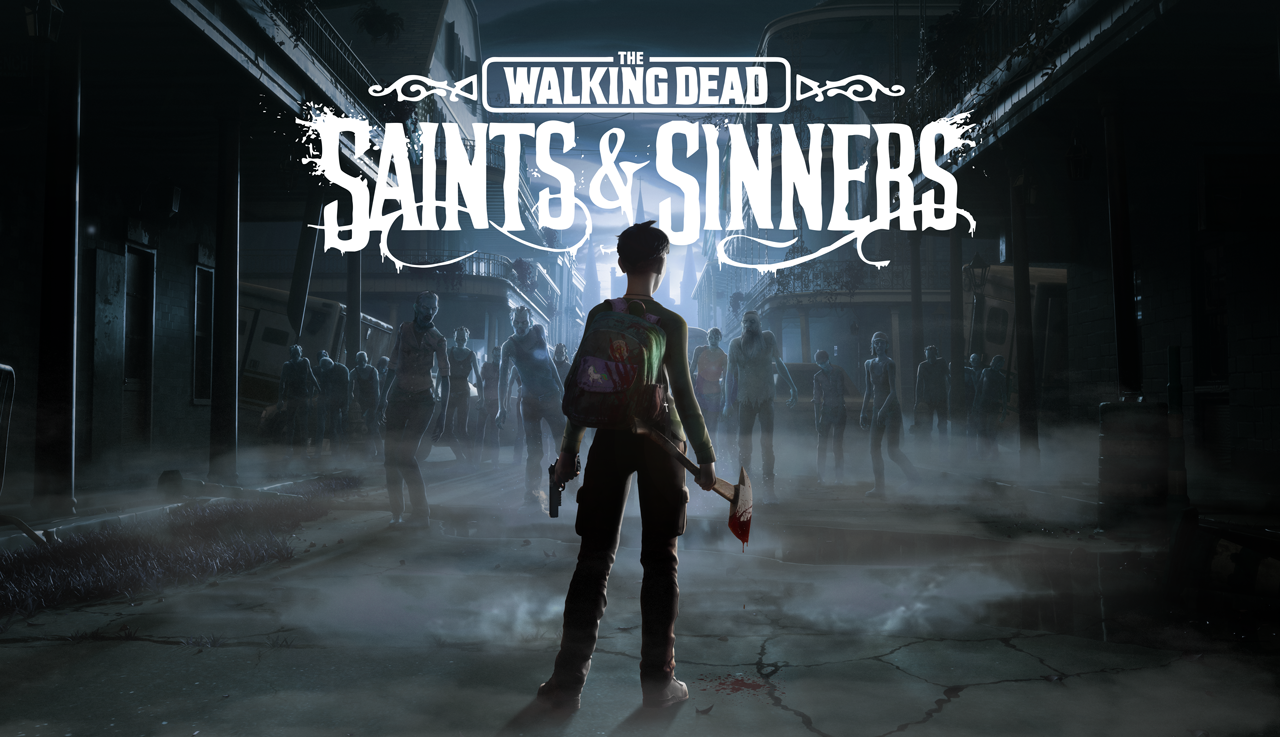
The waterlogged and zombie infested world of The Walking Dead: Saints & Sinners is filled with living people. People fighting and struggling to survive even after a year of trying to live in a world where everything is upside down, even the cycle of life and death. In the city of New Orleans most of these people are part of one of two societies. That of the Tower, or that of the Reclaimed. Those lost souls that are left to fend for themselves and are considered doomed to become another member of the hordes of the dead which roam the city streets are called “Exiles”.
The Tower has already been covered here in a previous article. So let’s delve into the product of The Tower’s heavy handedness, and it’s worst enemy, The Reclaimed.
Rebels Without a Cause
The Reclaimed began with the exile of Jean-Baptiste for insubordination. He, being a ruthless person of great will, did not simply perish like so many others. JB, as he is also known, was not one of the weak who were kicked out for not pulling their weight, and not one of the strong who were willing to do anything just to remain in the Tower fold. After his exile he began raiding Tower supply lines and depots. Other exiles began to join him, and as the ranks of what would become known as The Reclaimed grew, Mama of The Tower took notice.
They sent messages, and threatened him to stop or suffer the consequences. Jean-Baptiste refused. So naturally The Tower began to send death squads to hunt him down and kill him. JB outfoxed them time after time, and left their bodies behind. One was someone who used to be a friend of his during his time in The Tower. Trip was his name. While Jean-Baptiste slept, Trip tried to sneak up and cut the rebel’s throat. He was not successful, and after besting Trip JB dragged his still living body to the Southern Bump, a highly trafficked exit from The Tower, and hung him upside down. Trip bled out there, with a note pinned to his chest saying “Keep ‘em coming.”
With that the people of The Tower began to fear Jean-Baptiste, and more exiles who hated The Tower and its ever growing heavy-handedness and totalitarian practices joined him. The more The Tower exiled and killed, the more fled to the ranks of The Reclaimed. Skirmishes erupted all over the city of New Orleans. The Reclaimed ambushed Tower patrols and supply runs, killing many and hanging their bodies upside down just as JB had done to Trip. Mama and Georgia retaliated, but could not destroy the rebels. As Mama secluded herself and Georgia grew to greater leadership, then the reprisals became bloodier and crueler. The Reclaimed answered in kind, leading to the conflict over The Reserve that dominates The Walking Dead: Saints & Sinners.
The Reclaimed are the opposite of The Tower. While Tower policy focuses on extreme organization and the preservation of authority and order at any cost, The Reclaimed are basically anarchists. They are loosely organized at best, and receive little to no instruction from their de facto leader Jean-Baptiste, except through the form of his philosophical rants broadcast on the radio. While they are fierce they are more insurgents than a society.
The Reclaimed and The Tourist
The Reclaimed are not as hostile to The Tourist as The Tower are. While The Tower hold bases all around New Orleans, and will not shoot unless The Tourist attempts to enter. The Reclaimed can practically be seen as allies for most of the game. Where The Tourist must attack Tower strongholds in order to acquire parts or caches critical to finding The Reserve, often Reclaimed patrols will also attack those same strongholds. Unlike The Tower the Reclaimed never shoot The Tourist simply for occupying the same space as them. Of course they will retaliate if threatened or attacked, but who wouldn’t? It would be foolish to fight The Reclaimed for most of the game, because they pose no threat and do not bar the way to any resources or loot.
The Reclaimed are few in number compared to The Tower, and the results of their attacks can be seen in the upside down corpses dressed in Tower blue. As the game progresses this is seen more and more in buildings that were once Tower strongholds. The Reclaimed slowly reclaim New Orleans, and you help them in that by fighting The Tower. Though in the Aftershocks DLC all bets are off. The Reclaimed fight the player just as The Tower do, as they are just as desperate for the remnants of The Reserve scattered around New Orleans.
Conclusion
According to Jean-Baptiste himself The Reclaimed simply wish to “Live purposeful lives, reclaim the world and our humanity…” That is doubtful from the actions of The Reclaimed throughout the game, and Jean-Baptiste’s own. The Reclaimed live as The Tower do, simply without a single authority to hold them together. They scavenge New Orleans and fight The Tower over supplies. They do not start farms or schools, or reclaim any semblance of society or culture. They are simply rebels driven purely by hatred for the cruelty of The Tower that cast them out. If The Tower collapsed and ceased existing, then The Reclaimed would likely fight each other over resources or drift away into the flooded streets of New Orleans.
JB’s philosophy rings false, especially since his followers do not share it. He states a hatred for Survivalism and a dependence on doing whatever it takes to eke out a bare existence on the scraps of a world destroyed by the undead. It is clear in the actions of his followers that they do not share those views. They fight over The Reserve and, later, the Reserve caches, just as The Tower does. JB himself only lived through stealing Tower supplies. They are survivalists just as much as The Tower are, and the only thing binding them together is not a desire to reclaim or create, but to destroy. Since Jean-Baptiste does not have the control to direct The Reclaimed to a better path, then they will fail in time just as surely as The Tower will.
See our previous article on The Tower for the Stalinist police state that started this rebellion. For more on The Reclaimed, see what Jean-Baptiste has to say for himself on Youtube.
The Walking Dead: Saints & Sinners is available on Steam for 39.99$. It is also available on the Oculus Store for 39.99$. This is one of the best Virtual Reality experiences out there right now, with extremely polished survival gameplay and a compelling story. Not to mention an unmatched melee combat system, focusing on piercing the skull of course, because zombies. If you like zombie games then this is one you should not miss. Even if you aren’t a huge zombie culture fan, this is a game that is well worth its price tag for even a single playthrough. There’s even an Arena Survival Mode, and more free updates.